Auto Shredder Residue: The Part of Your Car Nobody Recycles
8 min read · August 17, 2026 · Updated August 29, 2026
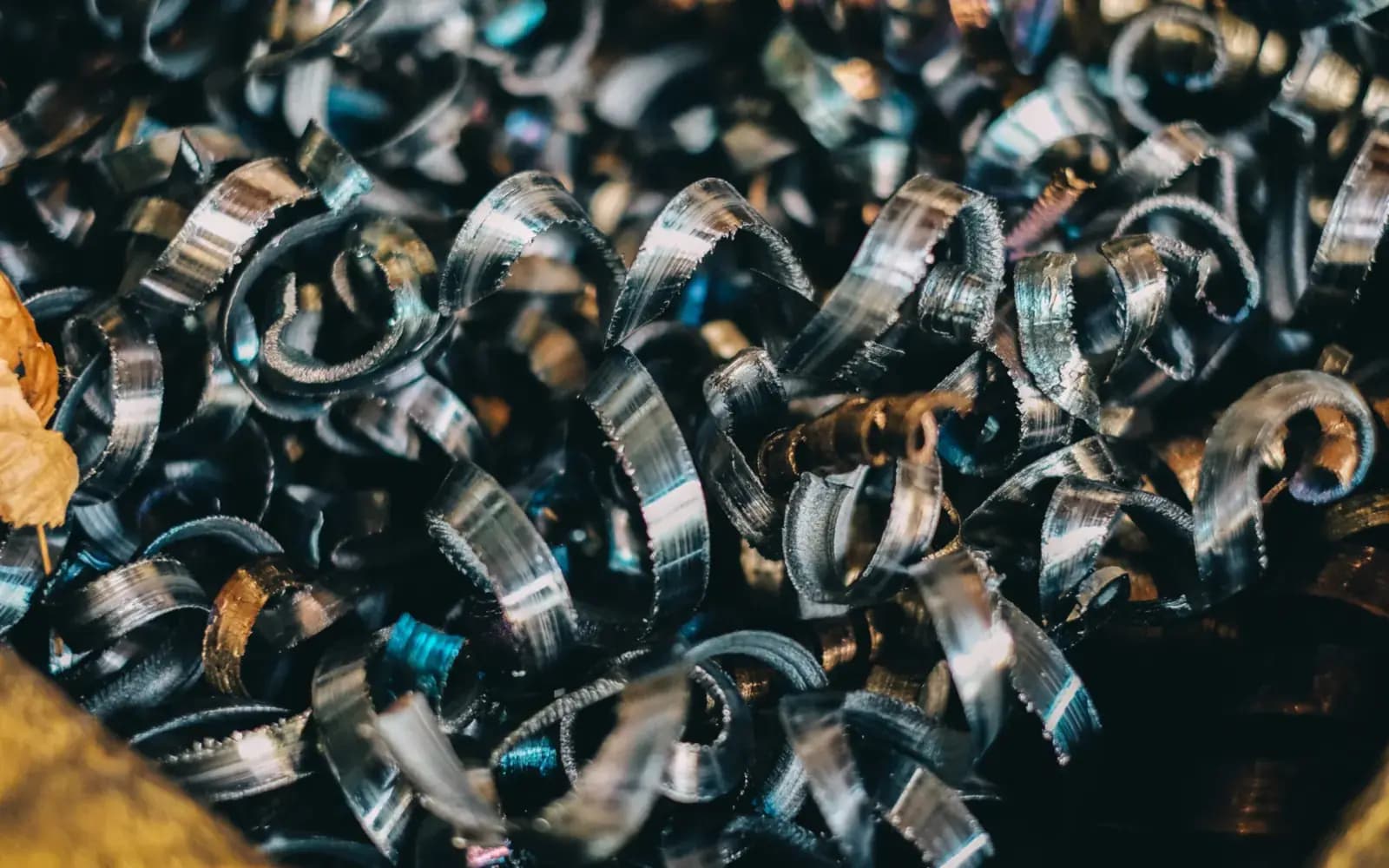
Auto shredder residue, often called "fluff," is the mixed leftover material — plastic, foam, rubber, fabric, glass, and dirt — that remains after a car has been shredded and its metal has been pulled out for recycling. Most of a scrapped vehicle by weight ends up recycled as metal; the shredder residue is the fraction that can't be sorted economically and, according to the EPA, is mostly landfilled. It's the one part of your old car that genuinely doesn't have a clean recycling path yet.
What is auto shredder residue, exactly?
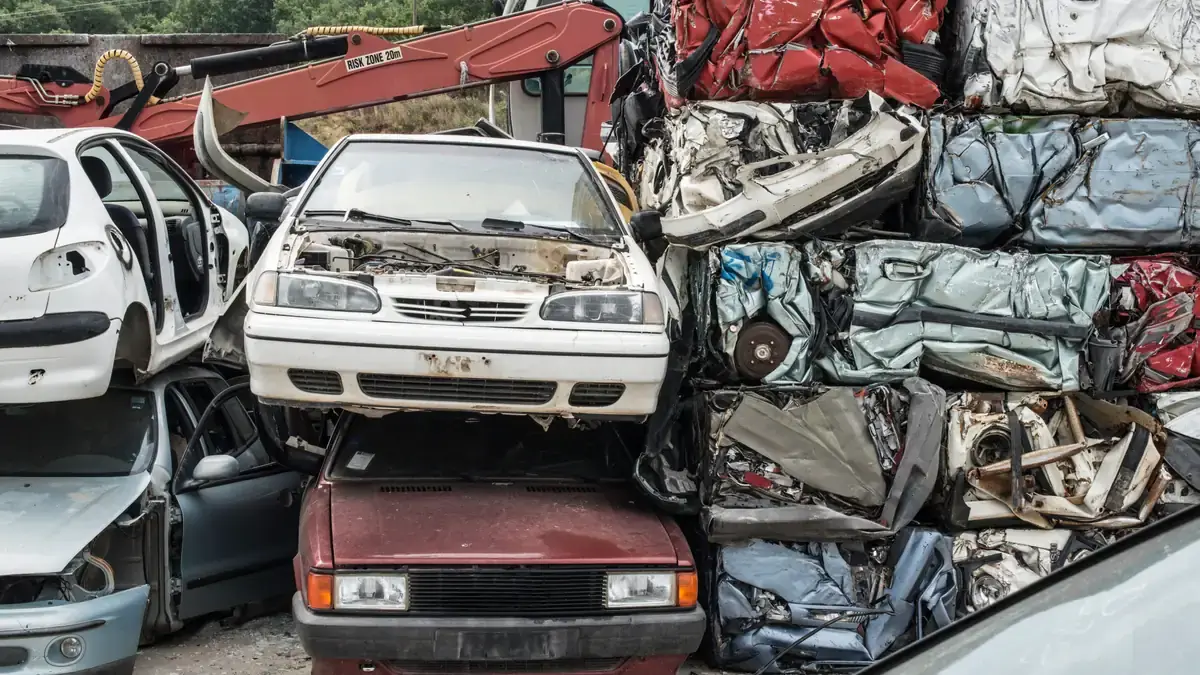
Once a car reaches the end of its road — bought by a junkyard, stripped of usable parts, and eventually fed into an industrial shredder — the shredder tears the whole vehicle into fist-sized pieces in seconds. Powerful magnets and eddy-current separators then pull out the ferrous and non-ferrous metal: steel body panels, the engine block, aluminum wheels, wiring copper. According to the U.S. EPA's overview of vehicle recycling, roughly 75 percent of a vehicle's weight is metal, and that share is what gets recovered and sold back into the scrap steel and aluminum supply chain — the same metals recycling stream that determines a lot of what a junk buyer can offer for your car in the first place.
What's left after the metal comes out is auto shredder residue: a jumbled, contaminated mix of everything that isn't metal. Foam seat cushions. Dashboard plastic. Carpet and headliner fabric. Wiring insulation. Broken glass. Rubber hose and gasket fragments. Undercarriage dirt and rust flakes. None of it arrives in a form that's separated or clean — it's all mashed together by the shredder itself, which is precisely what makes it hard to deal with afterward.
How much of a car actually becomes shredder residue?
The EPA's vehicle recycling page — now in the agency's archive, so treat the figures as a snapshot rather than this year's number — states that vehicles sent to salvage yards and scrap facilities each year number over 10 million, and that approximately 75 percent of a vehicle's weight is metal that gets recycled. The remainder — the auto shredder fluff — is what's left, and the EPA states plainly that it "is disposed of primarily in landfills." We're not going to hang an exact percentage figure on that remainder beyond what the EPA itself states, because published estimates of the non-metal share vary by source and by how a given shredder operation is configured. What's consistent across sources is the pattern: most of a car's weight is recovered as metal, and the leftover fraction is the part without a mainstream recycling outlet.
Why is shredder residue so hard to recycle?
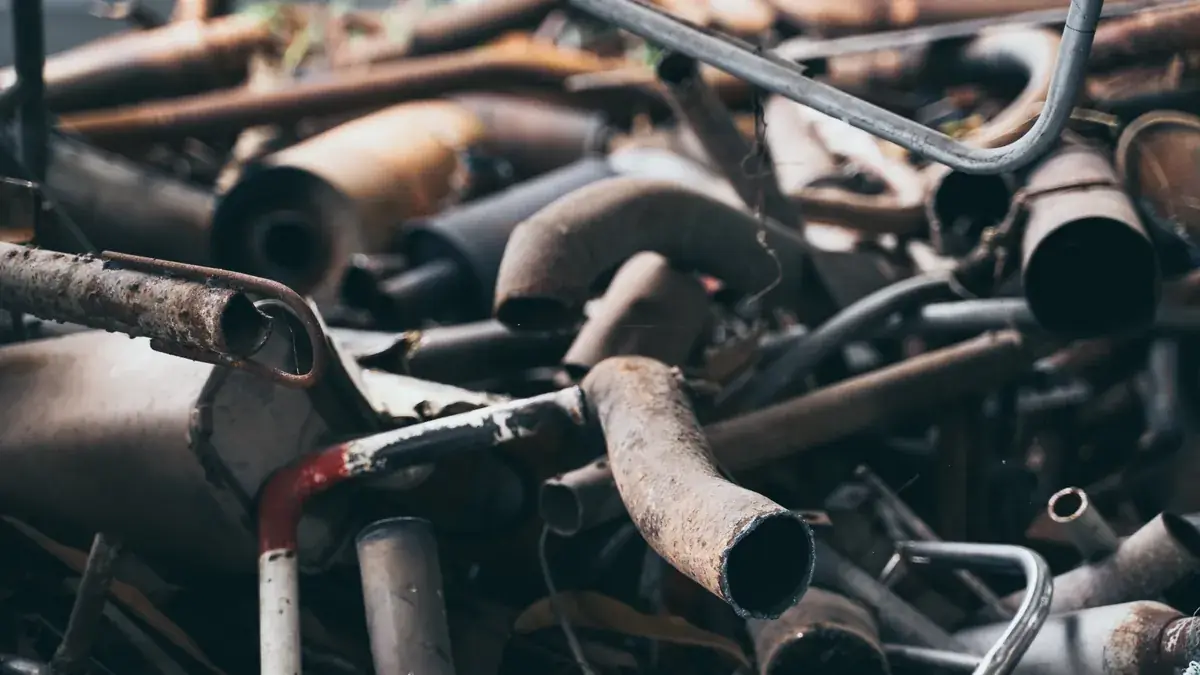
The core problem isn't that the materials in ASR are individually unrecyclable — plastic, foam, and rubber all have recycling markets in other contexts. The problem is how they arrive. A shredder doesn't disassemble a car; it shreds it. Foam that was bonded to fabric that was bonded to a metal seat frame comes out as a fused, torn fragment, not as clean polyurethane. Different plastic resins — the kind that would need to be sorted by type before they could be reprocessed into anything — are mixed together and often still carry metal clips, foam backing, or paint. Glass shards are mixed in with plastic and rubber. None of it is sorted by the shredding process itself, and sorting it afterward, material by material, out of a wet, dirty, mixed pile is expensive relative to what the recovered material would be worth.
That economics problem is the real story. It's not that the technology to separate ASR into individually recyclable plastic, rubber, and foam streams doesn't exist — advanced sorting lines using optical scanners, density separation, and manual picking can do some of it. It's that doing so, at scale, at a cost that's lower than the resale value of what comes out the other end, has been difficult to pull off consistently. The EPA's regulatory posture reflects that gap: its interpretation on recycling plastics from shredder residue lays out the conditions under which plastic separated from ASR can be recycled under federal PCB rules rather than treated as waste — a regulatory clarification that exists specifically because separating and recycling that plastic fraction is technically possible but has needed rules built around it before it could scale.
The metal recovery step, by contrast, is a solved problem and has been for decades. A shredder facility's magnetic separator pulls ferrous metal almost automatically, and eddy-current separators — which use an induced magnetic field to physically eject non-ferrous metal like aluminum and copper off a conveyor belt — handle the rest with a high degree of accuracy. That's exactly why the metal fraction of a car has a mature, liquid resale market and the non-metal fraction doesn't: one process is fast, cheap, and reliable at industrial scale, and the other still requires either expensive downstream sorting or accepting a mixed, low-value material.
Where does auto shredder residue end up?
By EPA's own description, most of it is landfilled. It isn't hazardous waste in the way that a car's fluids or a mercury switch is — those get pulled and reported separately by registered New York dismantling facilities well before the shredder ever sees the vehicle, and we've written about that process in our piece on how NY dismantlers handle fluids, airbags, and mercury switches. Shredder residue is a different category: not acutely hazardous on its own, but not a material with an established, large-scale recycling market either. Some facilities use portions of it as landfill cover. Some material recovery has expanded in recent years for the plastic fraction specifically, under the EPA guidance mentioned above. But the honest baseline, per EPA's own description, is that most of it goes to a landfill.
New York's Department of Environmental Conservation regulates the facilities where this waste stream is managed under the state's broader solid waste program, which covers permitting, oversight, and inspection of solid waste management facilities statewide — including the landfills and processing sites that ultimately handle shredder residue after a vehicle has passed through a shredder.
Does this affect what a junk car is worth?
No, and this is worth being direct about. What a buyer pays for your car is based on its metal weight, working parts, and current scrap metal pricing — not on what happens to the roughly one-quarter of the car that isn't metal. Our page on how scrap metal prices affect your offer walks through that pricing mechanism directly, and our breakdown of junk car pricing by weight explains the per-ton math. The catalytic converter is its own separate story with its own value, covered in how much of your car's value is the catalytic converter — it's pulled and sold separately long before a car reaches a shredder, precisely because its recovered metals are worth far more than scrap steel. Shredder residue sits downstream of all of that pricing. It's the industry's unsolved problem, not yours, and it doesn't show up as a deduction on your offer.
Why this matters for a seller, even though you'll never see it
Almost nobody who sells a junk car ever sees a shredder in operation, let alone the fluff pile that comes out the other end. That's exactly why this part of the process is worth explaining plainly rather than glossing over. A car that gets sold, towed, and processed through a licensed New York dismantler and scrap facility isn't disappearing cleanly — most of it is recycled as metal, a smaller portion of hazardous material is separately reported and handled, and a real remaining fraction becomes shredder residue that, honestly, still mostly ends up in a landfill. Knowing that doesn't change your offer or your payout. It's simply the most accurate answer available to "what actually happens to the rest of my car," and vague claims that "everything gets recycled" don't hold up against what the EPA itself publishes.
A seller's actual experience of this process
If you're in, say, Onondaga County and you sell a fifteen-year-old sedan that no longer runs, here's the honest sequence: a licensed buyer picks it up, a dismantler pulls the battery, drains the fluids, and recovers the catalytic converter and any resalable parts, and what's left of the body eventually goes to a shredder that separates steel and aluminum for resale. The residue from that shredding pass — foam, plastic, glass fragments, wiring insulation — goes wherever that specific facility's waste stream goes, most commonly a landfill. None of those steps depend on which county the car started in; what varies locally is simply which licensed facilities are nearby and how the paperwork moves between them, not the underlying process itself.
Where CashMyCarNY fits in
We buy junk cars across all 62 New York counties, running or not, and none of what happens after pickup changes the number we quote you. Get a free instant offer in about a minute, and if the price works, we schedule free towing — often same-day if it's set up by early afternoon. Our page on how the pickup process works covers what to expect from the moment you accept an offer to the moment the car leaves your driveway.
Quick answers
What is auto shredder residue? It's the mixed, non-metal material — plastic, foam, rubber, fabric, glass, and dirt — left over after a car is shredded and its metal is recovered. It comes out fused and mixed together rather than sorted, which is what makes it hard to recycle.
How much of a scrapped car becomes shredder residue? The EPA states that approximately 75 percent of a vehicle's weight is metal that gets recycled. The remaining, non-metal fraction is what becomes shredder residue; EPA doesn't publish a single fixed percentage for that remainder, so we don't invent one here.
Why can't auto shredder residue just be recycled like other plastic or rubber? The materials themselves are often recyclable in isolation, but the shredding process mixes different plastic resins, foam, fabric, glass, and metal fragments together. Sorting that mixed, contaminated pile into clean, separated material streams is expensive relative to what the recovered material is worth, which is why most of it still isn't recycled at scale.
Where does shredder residue actually go? According to the EPA, it's disposed of primarily in landfills. Some material recovery has expanded for the plastic fraction specifically under federal guidance, but landfilling remains the typical outcome.
Does shredder residue affect what I get paid for my junk car? No. Your offer is based on the car's metal weight, working parts, and current scrap pricing, not on what eventually happens to the non-metal fraction after shredding. That's covered in our guide to how scrap metal prices affect your offer.
Does it matter which part of New York my car is scrapped in, like near Onondaga County? No. The shredding process and what happens to the residue afterward work the same way statewide, including near our Onondaga County page. What changes locally is which licensed facilities are nearby, not the underlying process.
Get your instant offer
Free towing · No hidden fees · No obligation
Frequently Asked
Will you buy a car that failed NY inspection?
Yes. A failed inspection is one of the most common reasons people call us — and the repair estimate is often worth more than the car. We buy it whether it passed or not.
What kinds of cars do you buy?
Just about anything — running or not, wrecked, flooded, rusted out, or missing parts. We make offers on cars that other buyers pass on.
Do I need the title?
Having the title in hand is best — you'll sign it over in the seller section on the back at pickup. If your title is missing, tell us your situation and we'll walk you through what's possible.
How is my offer calculated?
We price your car based on year, make, model, and condition, plus current scrap value that week. Newer and larger vehicles are generally worth more, but there is no typical figure worth quoting — the number depends on your specific car, so get your own instant offer for the real one.
Is towing really free?
Yes — free towing means $0, no hidden fee, anywhere in New York.
How fast can you pick up?
We move quickly once your offer is accepted. Exact timing depends on your location and schedule, so we'll confirm a pickup window with you directly.
What paperwork do I need in NY?
You'll need your signed-over title, and your plates should come off before pickup. New York requires sellers to surrender plates to the DMV before canceling insurance, and the DMV issues an FS-6 receipt for the surrender — we'll walk you through it.
What happens to my plates?
Remove your plates before we arrive for pickup. You'll then surrender them to the DMV and keep the FS-6 receipt as your proof of surrender — check dmv.ny.gov for details on the process.
When and how do I get paid?
You get paid at pickup once the vehicle and paperwork are confirmed — no waiting around for a check in the mail.
We’ll Buy It.
Because when it comes down to it, junk cars are our thing. Anywhere in New York.