How Scrap Metal Prices Affect Your Offer (Plain English)
5 min read · June 26, 2026 · Updated August 15, 2026
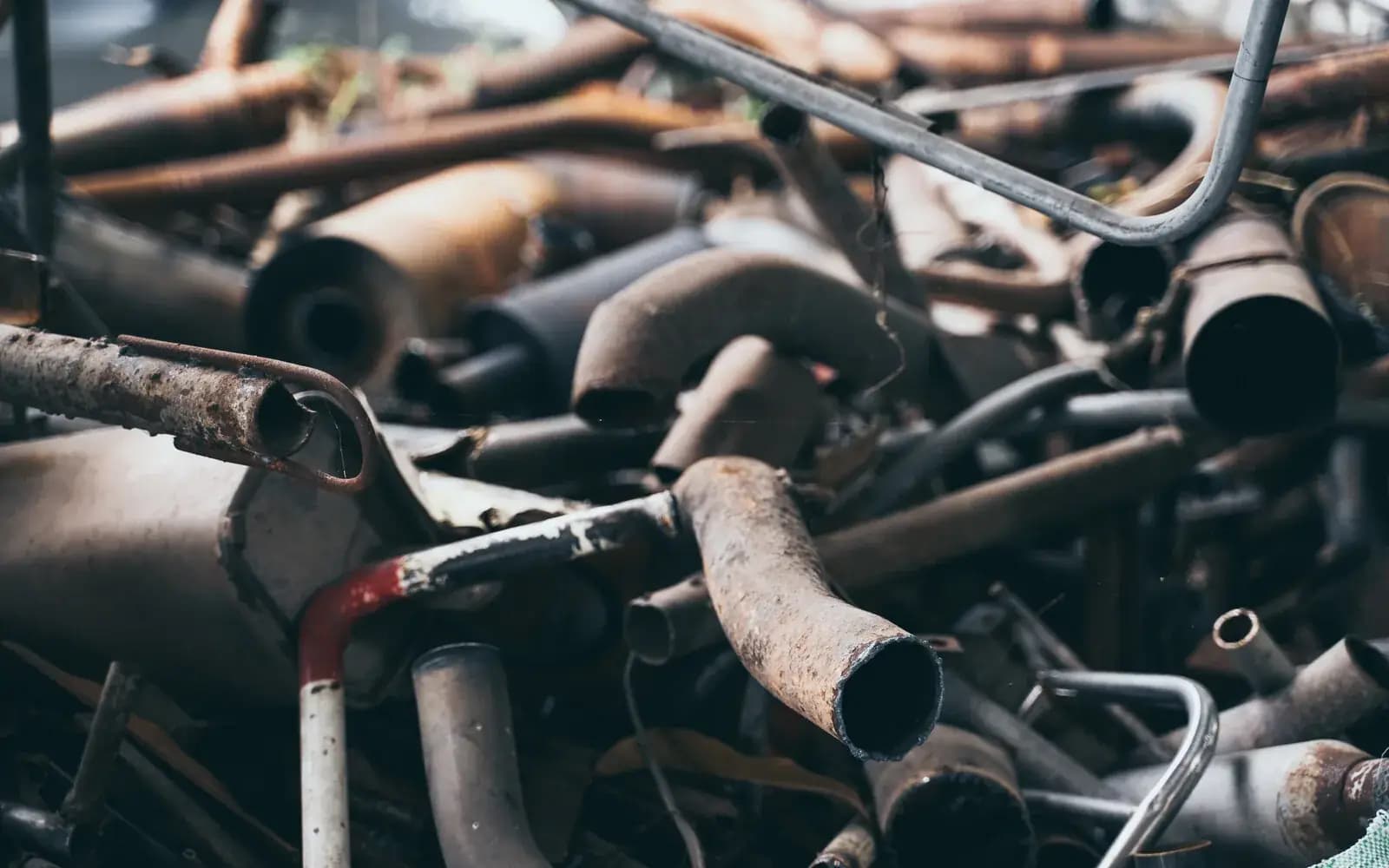
Part of your junk car's offer is tied to the price of steel, and steel prices move week to week. That's the plain mechanism behind why a quote can look different two months apart on the same car, and why a real offer comes with an expiration date instead of a lifetime guarantee. None of this is a trick, and it isn't specific to any one buyer. It's a commodity market doing what commodity markets do.
How much is a scrap car worth?
There's no flat number to give here, and any site that quotes one without seeing your car is guessing. What a scrap car is worth comes down to four things: its weight, how complete it is, where the scrap steel market sits this week, and whether it still has high-value parts like a running engine or a catalytic converter. Those factors combine differently for every car, which is why the honest answer is a real, current number rather than a published price — an instant offer is built to price your specific car against today's market instead of a stale table.
What's actually inside a junk car's price?
A junk car offer isn't one single number pulled from a chart. It's layered: a scrap-metal floor based on the car's weight, adjusted up or down by year, make, model, and condition, plus whatever working parts are still worth something on their own. None of those inputs work in isolation. An older car with a lot of miles can still land a solid offer if it's heavy and mostly intact, just as a newer car missing major parts can land lower than expected. As the site's own pricing approach puts it plainly, we price your car based on year, make, model, and condition, plus current scrap value. See how your specific car's value gets estimated for the fuller breakdown.
Steel is priced by weight, and that price moves
Scrap steel is a traded commodity, the same way lumber or copper is. Recyclers and mills buy it by the ton, and the price they're willing to pay shifts with supply, demand, and industrial activity, sometimes within the same week. No junk car buyer can promise today's number will still hold next month, because the underlying steel market itself doesn't sit still that long.
A heavier car usually carries more scrap value
All else being equal, a heavier vehicle has more raw steel in it, and more steel means a bigger chunk of the offer comes from scrap value alone before anything else gets factored in. That's part of why an old full-size sedan or a pickup truck can out-price a smaller car in similar condition. It's simple weight math sitting underneath everything else. It's also why trim level or added features rarely move the needle the way size does. A stripped-down compact and a loaded one weigh almost the same, but a compact and a full-size truck don't, and that raw weight gap shows up in the offer before condition or equipment ever get considered.
Where does a catalytic converter fit into the price?
A catalytic converter is priced separately from the rest of the car's scrap steel, because the metals inside it trade on their own market, not the steel market. That number moves on its own schedule and isn't something any buyer can quote as a flat rate that holds for long. It's a distinct line from the steel-weight math described above, which is why a car's converter situation can shift an offer independent of everything else about the vehicle.
Why did my quote from two months ago not match today's offer?
Because the market moved in between, and the quote you got two months ago was only ever a snapshot of that day's steel price. Picture two nearly identical vans, same year and mileage, sold two months apart by different owners on the same street. If steel prices moved in between, the second seller's offer reflects that even though nothing about the vehicles themselves changed. That's not one buyer being generous and the other stingy. It's the same math running on two different market days. Offers expire for the same reason a stock quote expires: the number underneath it is live, not fixed. If you're weighing whether to sell now or wait, our timing guide looks at that decision directly instead of assuming last month's number still applies.
Working parts add value beyond the scrap number
A car that still has a running engine, a good transmission, or usable tires often carries more than its scrap weight alone would suggest, because those parts have value beyond their metal content. Two cars of the same size and age can land on different numbers even when the steel math behind them is identical, purely because one still has serviceable parts and the other doesn't. That gap isn't about scrap weight at all. It's a separate value stream layered on top of it, which is part of why no two junk car offers are ever built from quite the same inputs.
Where CashMyCarNY fits in
We price your car the same way the real market works: year, make, model, and condition, plus current scrap value, not a guess pulled out of thin air. Get an instant offer in about 60 seconds, no-haggle, and you'll see today's actual number instead of a stale one from weeks ago. We buy cars other buyers pass on, running or not, and we're NY-only, all 62 counties, with payment at pickup.
Quick answers on scrap pricing
How much is a scrap car worth? It depends on the car's weight, how complete it is, the current scrap steel market, and whether it still has valuable parts like a working engine or catalytic converter — not a flat number that ignores your specific vehicle. Get an instant offer to see what those factors add up to on your car today.
How much can you get for scrapping a car? It comes down to the same factors: scrap weight, completeness, the current market price for steel, and any high-value parts still attached. There's no fixed nationwide figure, since the market itself moves week to week — an instant offer reflects today's actual mix of those factors instead of an old estimate.
Why do junk car quotes vary so much between companies for the same car? Different buyers weigh scrap value, parts value, and overhead differently, and they're checking the market on different days. Some variance is normal between two honest quotes; a written offer is how you compare them fairly.
Do working parts like the engine or transmission actually increase a junk car's price? Generally, yes. A running engine or a good transmission has value beyond its weight in steel, separate from the scrap-price mechanism that applies to the rest of the car, so two similar cars can price differently for this reason alone.
Is it better to sell my car for parts individually or sell it whole? Parting a car out piece by piece can bring in more total dollars, but it takes far more time, storage, and know-how than most sellers want to deal with. Selling it whole trades some of that ceiling for speed and simplicity.
Does the scrap steel market work differently in a place like Syracuse than the rest of New York? No. Steel is priced on national and global commodity markets, not local ones, so that part of your offer works the same in Syracuse as anywhere else in the state. Our Syracuse page has more on pickup in that area specifically.
The short version
Part of your junk car's offer comes from scrap steel priced by weight, and that market moves weekly, which is why offers expire and two quotes taken months apart can look different. Heavier cars carry more raw scrap value, a catalytic converter prices separately from the rest of the car, and working parts like a good engine or transmission add value on top of all of it. None of this is arbitrary. If you want today's actual number instead of an old one, a fresh instant offer reflects the current market, not last month's.
Get your instant offer
Free towing · No hidden fees · No obligation
Frequently Asked
Will you buy a car that failed NY inspection?
Yes. A failed inspection is one of the most common reasons people call us — and the repair estimate is often worth more than the car. We buy it whether it passed or not.
What kinds of cars do you buy?
Just about anything — running or not, wrecked, flooded, rusted out, or missing parts. We make offers on cars that other buyers pass on.
Do I need the title?
Having the title in hand is best — you'll sign it over in the seller section on the back at pickup. If your title is missing, tell us your situation and we'll walk you through what's possible.
How is my offer calculated?
We price your car based on year, make, model, and condition, plus current scrap value that week. Newer and larger vehicles are generally worth more, but there is no typical figure worth quoting — the number depends on your specific car, so get your own instant offer for the real one.
Is towing really free?
Yes — free towing means $0, no hidden fee, anywhere in New York.
How fast can you pick up?
We move quickly once your offer is accepted. Exact timing depends on your location and schedule, so we'll confirm a pickup window with you directly.
What paperwork do I need in NY?
You'll need your signed-over title, and your plates should come off before pickup. New York requires sellers to surrender plates to the DMV before canceling insurance, and the DMV issues an FS-6 receipt for the surrender — we'll walk you through it.
What happens to my plates?
Remove your plates before we arrive for pickup. You'll then surrender them to the DMV and keep the FS-6 receipt as your proof of surrender — check dmv.ny.gov for details on the process.
When and how do I get paid?
You get paid at pickup once the vehicle and paperwork are confirmed — no waiting around for a check in the mail.
We’ll Buy It.
Because when it comes down to it, junk cars are our thing. Anywhere in New York.