Someone Totaled My Car — Can I Sue?
8 min read · August 17, 2026 · Updated August 29, 2026
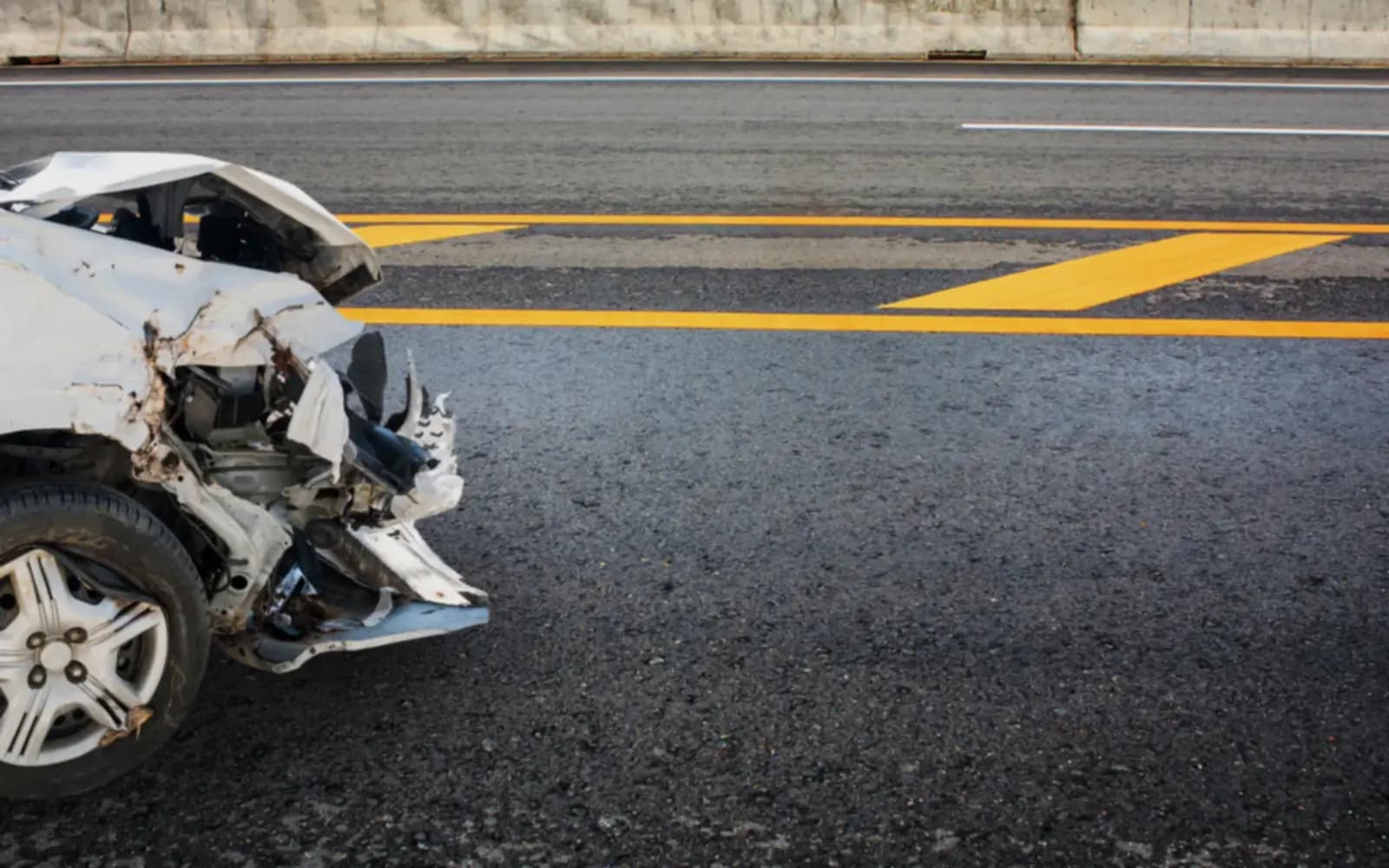
In New York, whether you can sue after your car was totaled depends on what kind of loss you're talking about. For property damage to the car itself, you generally can pursue the at-fault driver directly. For personal injury, New York is a no-fault state, which means your own insurer typically pays first regardless of who caused the accident, and suing for injury requires clearing a specific legal threshold. This post explains the general mechanism — it isn't legal advice, and it can't tell you whether you personally have a case.
Why New York's no-fault system changes this question
New York requires every registered vehicle to carry no-fault coverage as part of its insurance, under the state's Comprehensive Motor Vehicle Insurance Reparations Act. According to Insurance Law §5102, that coverage pays "basic economic loss" — medical expenses, a portion of lost earnings, and other documented costs — up to $50,000 per person, regardless of who caused the accident. The idea behind no-fault is that injured people get paid quickly through their own policy instead of waiting on a fault determination and a lawsuit.
That system exists specifically for injuries. It does not govern who pays for the car itself. Property damage — the car, not a person — works differently, which is why "can I sue" doesn't have one single answer here. It depends on which kind of loss you're asking about.
Can you sue over property damage to the car?
Generally, yes, this is the more straightforward side of the question. No-fault insurance in New York is built around personal injury and lost income, not vehicle damage. If another driver caused the accident that totaled your car, pursuing that driver — or more commonly, their liability insurer — for the value of the car is a property damage claim, and it isn't blocked by the no-fault system the way an injury claim is.
In practice, most property damage claims resolve through the insurance companies directly rather than through a courtroom: your insurer or the at-fault driver's insurer pays out based on the car's value, and if you disagree with that number, our guide to getting the most money from insurance for a totaled car covers how that valuation conversation typically goes. A lawsuit over property damage alone is possible when the claim doesn't resolve through normal channels, but that's a step most people take with an attorney, not on their own, and it's outside what this post can walk you through.
Keep in mind that "totaled" itself is a specific term. New York ties the total-loss decision to the same kind of damage-versus-value comparison used for salvage titling — an insurer typically calls a car a total loss once repair costs cross a set percentage of what the car was worth beforehand, the same math behind the state's salvage-certificate rules described on the DMV's salvage vehicles page. That's a separate question from fault, and it's worth not conflating the two: your car being totaled is a statement about repair economics, while who's responsible for paying you is a separate legal question this section is about.
Can you sue over an injury from the accident?
This is where New York's no-fault system puts a real limit in place. Under Insurance Law §5104, in most accidents between covered vehicles, "there shall be no right of recovery for non-economic loss, except in the case of a serious injury, or for basic economic loss." In plain terms: you generally can't sue for pain and suffering, and you generally can't sue to recover costs your no-fault coverage already covers, unless the injury meets the legal definition of "serious."
That word — serious — isn't a casual description. Insurance Law §5102(d) defines "serious injury" as a personal injury that results in death, dismemberment, significant disfigurement, a fracture, loss of a fetus, permanent loss of use of a body organ, member, function, or system, permanent consequential limitation of use of a body organ or member, or significant limitation of use of a body function or system. There's also a category covering a medically determined injury of a non-permanent nature that meets additional conditions spelled out in the same statute.
This is exactly the kind of determination that depends on medical evidence and legal interpretation specific to your situation — not something a general guide can evaluate for you. Whether an injury clears that bar is a question for a doctor's documentation and, ultimately, an attorney or a court, not a rule of thumb.
So can you sue, or not?
It depends on what was damaged and how badly anyone was hurt, and this article can't tell you which category your situation falls into. What the law actually sets up is:
- Property damage to the car generally isn't blocked by no-fault, and pursuing the at-fault party's insurer — or, in some cases, a lawsuit — is a normal part of resolving that kind of claim.
- Injury claims generally run through your own no-fault coverage first, up to the basic economic loss limits in §5102, and a lawsuit for pain and suffering or costs beyond that requires meeting the "serious injury" threshold in §5104.
Neither of those bullet points is a prediction about your case. They describe the structure of New York's law, not an outcome.
What this article isn't
This is background on how New York's no-fault system works, not legal advice, and it can't evaluate your accident, your injuries, or your paperwork. It won't tell you whether your injury meets the serious-injury threshold, whether a specific settlement offer is fair, or whether a lawsuit makes sense for your situation. Those are questions that depend on medical records, police reports, insurance policy language, and facts specific to what happened — exactly the kind of analysis that requires an attorney who can actually review your case, not a general explainer.
When it's worth talking to an attorney
A few situations are common enough to flag directly, without predicting how any of them would turn out:
- An insurer is disputing whether your injury is "serious" under the statutory definition, or is denying a claim you believe should be covered.
- The settlement offer for your totaled car feels disconnected from the car's actual pre-accident value, and the insurer isn't budging after you've pushed back with documentation.
- You're not sure whether your no-fault benefits have been exhausted, or what happens once they are.
- The accident involved a driver who wasn't insured, or wasn't identifiable, which changes which coverage applies.
- You're simply unsure which category — property damage, injury, or both — your situation falls into.
In any of these, an attorney who handles New York auto accident claims can review your specific facts in a way this article structurally cannot. Many personal injury attorneys offer free initial consultations, so getting a professional read on your situation doesn't have to be a financial commitment before you even know if you have a claim worth pursuing.
Where the car itself fits into this
Whatever happens with an injury claim or a dispute over the settlement amount, the car itself is a separate, more immediate decision. If your car has already been declared a total loss, our guide on totaled by insurance — can I still sell the car covers what your options actually are once that call has been made, including whether you're required to hand the car over. If you kept the car instead, owner-retained salvage explains what that paperwork looks like from here. And if your claim is still open and no total-loss decision has been finalized yet, our guide on selling while a claim is still open is the more relevant read for right now.
If you've reached the point where you just want the car gone — whether the legal and insurance questions are resolved or still ongoing — CashMyCarNY buys totaled, wrecked, and salvage-branded cars regardless of where things stand with a claim or a lawsuit. Get an instant offer in about 60 seconds, no-haggle, with free towing anywhere in New York and payment at pickup.
The short version
New York's no-fault system means personal injury claims from a car accident generally run through your own insurance first, and suing for pain and suffering requires clearing the "serious injury" threshold defined in Insurance Law §5102 and limited by §5104. Property damage to the car works differently and generally isn't blocked by no-fault, so pursuing the at-fault driver's insurer — or a lawsuit, if it comes to that — is a normal part of that process. None of this predicts your outcome. If an insurer is disputing your injury, your settlement, or your coverage, or you're simply unsure which category your situation falls into, an attorney who can review your specific facts is the right next step, not a general guide like this one.
Quick answers
Someone totaled my car — can I sue? It depends on what kind of loss you mean. Property damage to the car generally isn't blocked by New York's no-fault system, so pursuing the at-fault driver's insurer is normal. A lawsuit for personal injury generally requires meeting the "serious injury" threshold defined in Insurance Law §5102.
What does "no-fault" actually mean in New York? It means your own insurance typically pays your basic economic loss — medical expenses and a portion of lost earnings, up to $50,000 per person — regardless of who caused the accident, rather than waiting on a fault determination first.
Can I sue for pain and suffering after a car accident in New York? Only if the injury meets the statutory definition of "serious injury" under Insurance Law §5102(d), which includes things like death, dismemberment, a fracture, or permanent limitation of a body function. Whether a specific injury qualifies is a medical and legal determination, not something a general guide can assess.
Do I need a lawyer if my car was totaled? Not necessarily for a straightforward property damage claim that your insurer or the at-fault driver's insurer resolves directly. It becomes worth consulting an attorney when there's a dispute over the settlement, a denied claim, an uninsured driver, or any question about whether an injury clears the serious-injury threshold.
Does New York's no-fault rule apply the same way in a place like Nassau County as the rest of the state? Yes. No-fault insurance is set by New York state law, not by county, so a claim in Nassau County follows the same rules under Insurance Law §5102 and §5104 as one anywhere else in New York.
What should I do with the car itself while I sort out the claim? That depends on whether a total-loss decision has already been made. Totaled by insurance — can I still sell the car and selling while a claim is still open cover those two stages separately, since the right move depends on where your claim actually stands.
Get your instant offer
Free towing · No hidden fees · No obligation

Frequently Asked
Will you buy a car that failed NY inspection?
Yes. A failed inspection is one of the most common reasons people call us — and the repair estimate is often worth more than the car. We buy it whether it passed or not.
What kinds of cars do you buy?
Just about anything — running or not, wrecked, flooded, rusted out, or missing parts. We make offers on cars that other buyers pass on.
Do I need the title?
Having the title in hand is best — you'll sign it over in the seller section on the back at pickup. If your title is missing, tell us your situation and we'll walk you through what's possible.
How is my offer calculated?
We price your car based on year, make, model, and condition, plus current scrap value that week. Newer and larger vehicles are generally worth more, but there is no typical figure worth quoting — the number depends on your specific car, so get your own instant offer for the real one.
Is towing really free?
Yes — free towing means $0, no hidden fee, anywhere in New York.
How fast can you pick up?
We move quickly once your offer is accepted. Exact timing depends on your location and schedule, so we'll confirm a pickup window with you directly.
What paperwork do I need in NY?
You'll need your signed-over title, and your plates should come off before pickup. New York requires sellers to surrender plates to the DMV before canceling insurance, and the DMV issues an FS-6 receipt for the surrender — we'll walk you through it.
What happens to my plates?
Remove your plates before we arrive for pickup. You'll then surrender them to the DMV and keep the FS-6 receipt as your proof of surrender — check dmv.ny.gov for details on the process.
When and how do I get paid?
You get paid at pickup once the vehicle and paperwork are confirmed — no waiting around for a check in the mail.
We’ll Buy It.
Because when it comes down to it, junk cars are our thing. Anywhere in New York.