Fluids, Airbags, and Mercury Switches: How NY Dismantlers Recycle Safely
5 min read · July 8, 2026 · Updated August 8, 2026
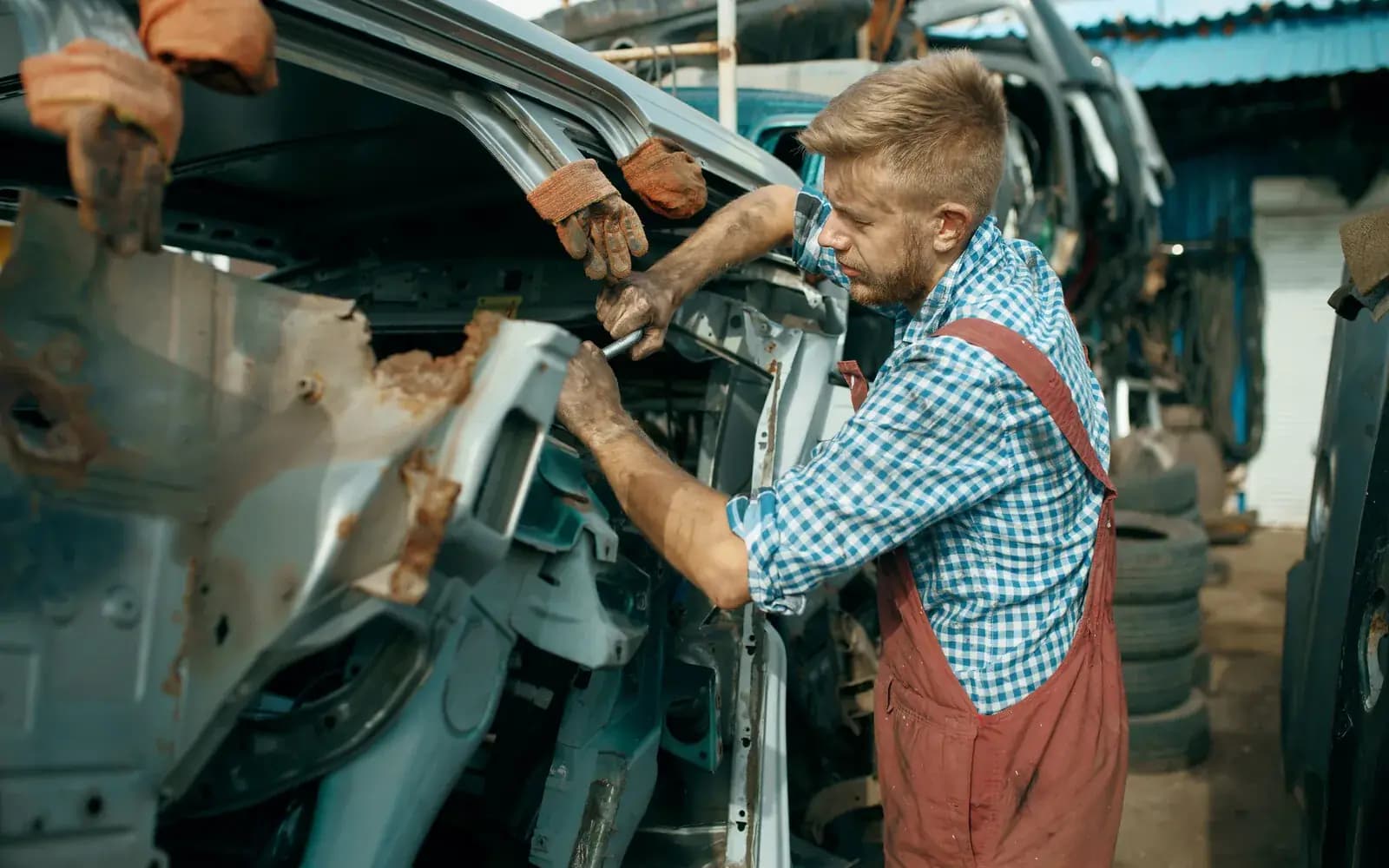
Before a car gets shredded for scrap in New York, a registered dismantler has to drain its fluids and account for specific hazardous components — mercury switches most notably — in reports filed with the state every year. That's a real regulatory step, not an assumption, though almost nobody explains it to the person actually signing the car over. Airbags get less of a public paper trail, and it's worth being upfront about that gap rather than guessing at one. None of this changes what your car is worth or how fast it gets picked up — it's simply what happens once it's out of your hands.
What happens to the fluids?
A vehicle carries more than one fluid that can't just drain into the ground: engine oil, transmission and axle fluid, hydraulic and power-steering fluid, and brake fluid all have to be accounted for once a car reaches the end of its life. Registered vehicle dismantling facilities are required to track the volumes of these end-of-life fluids and report them to New York's Department of Environmental Conservation. That reporting duty is exactly what separates a facility that's actually registered from a lot that's simply calling itself a junkyard. None of it happens in front of the person dropping the car off, which is part of why it's rarely explained at all.
Mercury switches: a small part with its own federal-state program
If your car was built before 2003, it may carry small mercury switches tucked into hood or trunk lighting, or into the anti-lock braking system. Those switches are the subject of the National Vehicle Mercury Switch Recovery Program, and New York facilities that handle end-of-life vehicles file annual reports on their recovery with the state's Department of Environmental Conservation. A part that small rarely gets a second thought from a seller, but it has its own dedicated federal-state recovery structure precisely because mercury is hazardous in a way that scales with volume. A car old enough to still have one is also usually a car that's been sitting a while, which tends to be exactly when someone finally decides it's time to let it go.
What about airbags?
Airbags contain their own hazardous components and get handled as part of a dismantler's overall safety process, but New York's public DEC pages don't spell out a specific airbag recovery or reporting requirement the way they do for fluids and mercury switches. That's worth saying plainly instead of guessing at a procedure that isn't published anywhere consumer-facing. If exactly how your car's airbags get handled matters to you, that's a fair question to put directly to the facility — it's simply not one this page can answer with a citation behind it.
Who's actually on the hook for all this?
The reporting duties above fall on registered vehicle dismantling facilities specifically, a narrower category than "junkyard" or "scrap yard" in everyday conversation. Our guide to junkyard vs. scrap yard vs. dismantler — who's licensed for what in NY breaks down why the sign out front doesn't actually tell you who's registered to do this work. A car that changes hands more than once before reaching its final destination doesn't skip this step; it just means the registered facility at the end of that chain is the one filing the report.
A car that's been sitting since before 2003
Picture a car that's been parked in a garage for years, the kind with hood-mounted parking lights and a dashboard old enough to still have a cassette slot. That's exactly the profile of a vehicle likely to carry an old-style mercury switch, on top of whatever fluids are still sitting in the lines after years of not running. None of that makes the car harder to sell. It just means its eventual trip through a dismantling facility involves a couple of extra reporting steps that a five-year-old car's trip wouldn't.
Why this matters even though you'll never see it happen
Almost none of this happens where a seller can watch it, which is exactly why it's easy to assume it doesn't happen at all. Our page on what happens to your car after we buy it walks through the fuller path from pickup to parts counter to shredder, and the fluid and mercury-switch reporting above is the regulatory backbone running underneath that entire process. Knowing it exists doesn't change your payout, but it's a reasonable thing to want confirmed before signing a car over to anyone.
Where CashMyCarNY fits in
Once you accept an offer, free towing takes the car off your hands at no cost, anywhere in New York, whether it runs or not — and same-day pickup is often possible if things are scheduled by early afternoon. Getting to that point starts with an instant offer, about 60 seconds with no haggling. We only buy in New York, all 62 counties, so how the pickup process works is built around facilities we actually know, not a national network guessing at local rules.
Quick answers
What happens to the fluids in my car when it's scrapped in New York? A registered dismantling facility has to drain and account for engine oil, transmission and axle fluid, hydraulic and power-steering fluid, and brake fluid, then report those volumes to the state's Department of Environmental Conservation every year.
What are mercury switches, and why do they matter? They're small switches found in pre-2003 vehicles, usually in hood or trunk lighting or the anti-lock braking system. They're covered by the National Vehicle Mercury Switch Recovery Program, which is why registered NY facilities specifically track and report recovering them.
Are airbags recycled safely too? They're handled as part of a facility's overall safety process, but New York's public DEC pages don't lay out an airbag-specific reporting requirement the way they do for fluids and mercury switches. Ask the facility directly if that particular detail matters to you.
Does it matter which dismantler handles a car near our Oneida County page? No. The DEC registration and reporting requirements apply the same way statewide, including in Oneida County. What changes by area is simply which registered facilities happen to be nearby, not the rules they follow.
The short version
New York doesn't leave what happens to a scrapped car's fluids and mercury switches to guesswork. Registered dismantling facilities have to drain and report engine oil, transmission and other fluids, and separately track mercury switch recovery from pre-2003 vehicles, all filed annually with the state's Department of Environmental Conservation. Airbags are handled as part of the same safety process, but New York's public pages don't spell out a matching reporting requirement for them specifically, which is worth knowing rather than assuming. None of this changes what a car is worth or how quickly it can be picked up — it's simply the regulatory layer that runs after the sale, not before it.
Get your instant offer
Free towing · No hidden fees · No obligation
Frequently Asked
Will you buy a car that failed NY inspection?
Yes. A failed inspection is one of the most common reasons people call us — and the repair estimate is often worth more than the car. We buy it whether it passed or not.
What kinds of cars do you buy?
Just about anything — running or not, wrecked, flooded, rusted out, or missing parts. We make offers on cars that other buyers pass on.
Do I need the title?
Having the title in hand is best — you'll sign it over in the seller section on the back at pickup. If your title is missing, tell us your situation and we'll walk you through what's possible.
How is my offer calculated?
We price your car based on year, make, model, and condition, plus current scrap value that week. Newer and larger vehicles are generally worth more, but there is no typical figure worth quoting — the number depends on your specific car, so get your own instant offer for the real one.
Is towing really free?
Yes — free towing means $0, no hidden fee, anywhere in New York.
How fast can you pick up?
We move quickly once your offer is accepted. Exact timing depends on your location and schedule, so we'll confirm a pickup window with you directly.
What paperwork do I need in NY?
You'll need your signed-over title, and your plates should come off before pickup. New York requires sellers to surrender plates to the DMV before canceling insurance, and the DMV issues an FS-6 receipt for the surrender — we'll walk you through it.
What happens to my plates?
Remove your plates before we arrive for pickup. You'll then surrender them to the DMV and keep the FS-6 receipt as your proof of surrender — check dmv.ny.gov for details on the process.
When and how do I get paid?
You get paid at pickup once the vehicle and paperwork are confirmed — no waiting around for a check in the mail.
We’ll Buy It.
Because when it comes down to it, junk cars are our thing. Anywhere in New York.