Who Buys Junk Cars in New York?
8 min read · August 15, 2026 · Updated September 2, 2026
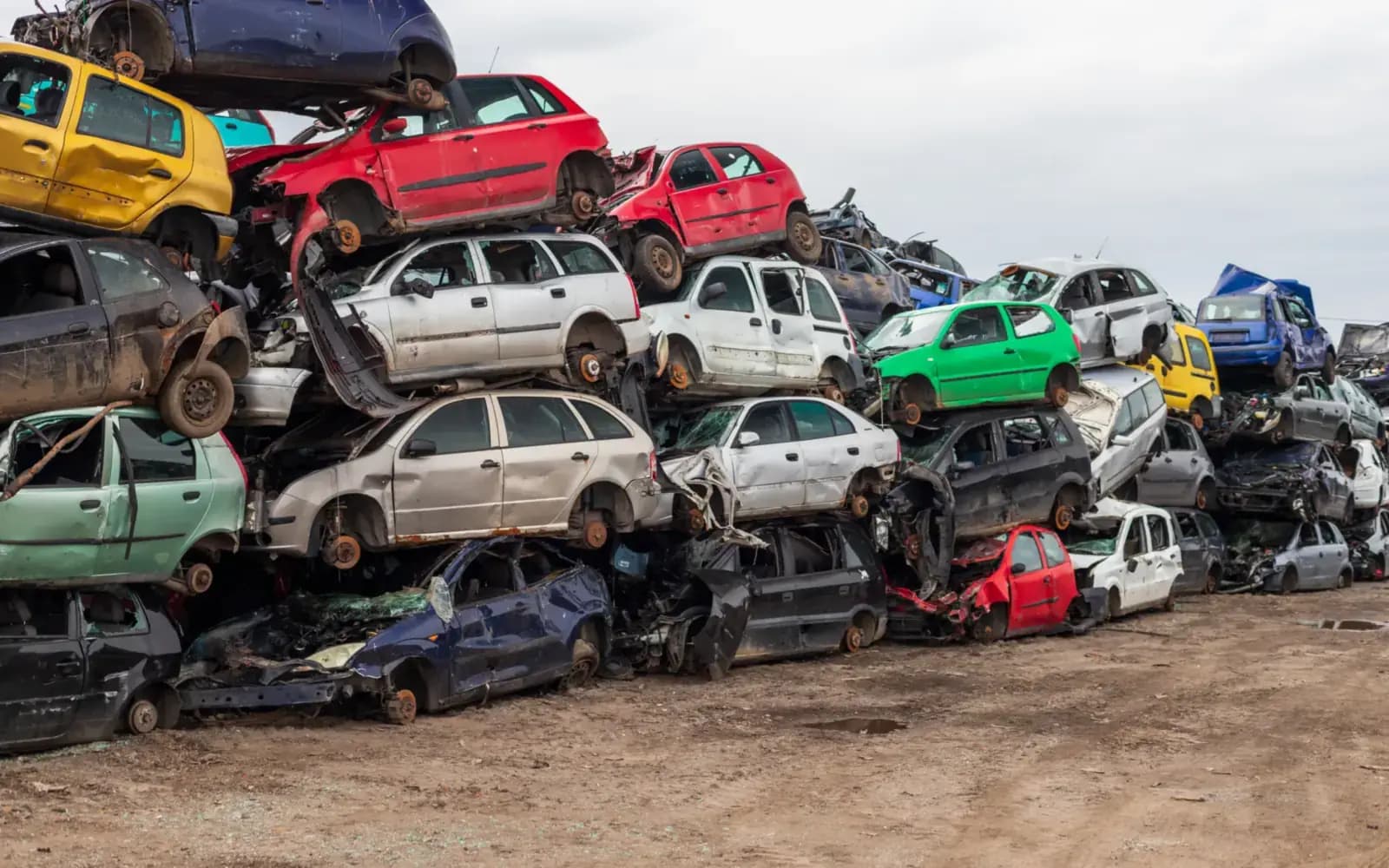
"Who buys junk cars?" turns out to be two questions wearing one coat. The first is which kinds of business will take a car in your car's condition. The second is which of them is the right fit for your particular situation — and the answer is genuinely different for a rusted sedan with no title than for a three-year-old car that was just totaled.
This walks through every kind of buyer operating in New York, what each is actually good at, where each one is the wrong call, and — the part most articles skip — how to check that the buyer in front of you is licensed to do what they say they do.
Start with what your car actually is
Before comparing buyers, be honest about three things, because they eliminate most of the list on their own.
Does it run and drive? If yes, every option below is open and a private sale may genuinely beat scrap value. If no, the realistic list narrows to dismantlers, junk car services, and donation — and free towing stops being a perk and becomes the thing that makes the sale possible at all.
Do you have the title? Having it widens your options and simplifies every one of them. Missing it is rarely fatal — can a junkyard legally buy a car without a title in NY covers what is possible — but a private buyer will almost always expect one.
How fast do you need it gone? Storage costs, code-enforcement letters, and tickets accumulating on a parked car all change the math. A listing that sits for six weeks is not free if the car is costing you money in the meantime.
If you are not sure what the car is worth to any of them, how much are junk cars worth explains what actually builds the number.
Licensed dismantlers and salvage yards
A licensed dismantler is the end of the line for most junk cars, and usually the most straightforward sale. They buy for parts and scrap value, so condition matters far less than it does to any other buyer — a car that does not start, does not drive, and is missing pieces is normal inventory rather than a problem.
Best for: non-running cars, heavy rust, wrecked cars, high-mileage cars past the point of repair, anything a private buyer would refuse.
The catch: the number is driven by weight, completeness, and the scrap market that week rather than by anything sentimental about the car. If you are hoping a well-maintained engine will command a premium, this is not the buyer that pays for it.
Not every business in this space holds the same license, and the distinctions matter for who can legally handle your paperwork. Junkyard vs scrap yard vs dismantler explains who is licensed for what in New York.
Junk car buying services
These buy the same cars a dismantler does, but quote you up front and handle the towing. The practical difference is that you get a number before anyone touches the car, and the car does not have to move under its own power or at your expense.
Best for: anyone who wants a firm number before committing, and anyone whose car cannot be driven anywhere.
The catch: quote quality varies enormously. Some operations quote high sight-unseen and adjust downward once the truck is in your driveway — common enough to have a name. How to prevent a bait-and-switch covers what to lock down in advance.
Dealer trade-in
Worth trying only if the car still runs and drives. Dealers are in the business of reselling cars, so a vehicle that cannot be resold is a cost to them, not an asset — which is why trade-in offers on dead cars are often nominal or refused outright.
Best for: running cars, especially if you are buying a replacement from the same dealer in the same transaction.
The catch: on a genuinely dead car, the trade-in figure is frequently lower than what a junk buyer pays, because the dealer is going to send it to a dismantler anyway and needs margin in between. The full comparison is in trade in or sell a dead car.
National online buyers
The services that quote through a form or app. Convenient, and genuinely useful for pricing a common car quickly.
Best for: getting a fast baseline number to compare against.
The catch: many operate as national networks that subcontract the actual pickup, so the tow radius and the local yard doing the work are not always obvious from the website. For a New York car, that can mean longer scheduling windows and a hand-off you did not agree to. It is also worth understanding why quotes vary so much between companies before assuming the highest number is the real one.
Private buyers and marketplace listings
Selling to an individual makes sense in one specific case: the car still runs, and someone wants it as transportation or a project rather than as scrap.
Best for: running cars, desirable project cars, and vehicles with parts value that an enthusiast will pay for.
The catch: this is the option with the most exposure. You are dealing with strangers, payment fraud is a real pattern, and the paperwork risk lands on you if the buyer never registers the car. Marketplace stranger vs professional buyer lays out the actual risk math, and fake cashier's checks and overpayment scams covers the most common way this goes wrong.
Donation
Giving the car to a charity, usually with free pickup included.
Best for: people who want the car gone with minimal effort and care more about the cause than the cash.
The catch: the tax benefit only helps if you itemize, and what you can deduct depends on what the charity does with the car. How the car donation tax deduction actually works in NY covers the mechanics, and donate or sell a junk car in NY is the honest side-by-side.
How to check a New York buyer is actually licensed
This is the part that separates a real buyer from a truck with a phone number, and it takes about two minutes.
Ask for the business name and the license it holds. A legitimate operation will answer without hesitating, because it is a matter of public record. Vagueness here — a first name only, a mobile number, "we work with a yard" — is the single most reliable warning sign in the whole process.
Then confirm the number they quoted is in writing, with your car's condition described in it. Not a text saying "$X for the Honda," but a quote that names the year, make, model, whether it runs, and what is missing. That document is what makes a price drop at pickup an argument you can win rather than a word-against-word.
Finally, understand who is actually coming. If the buyer subcontracts the tow, ask which company and confirm they know the quoted figure. Most pickup disputes trace back to a driver who was told something different from what you were told.
How to verify a junk car buyer is actually licensed in NY goes through this in detail, including what to do when the answers do not add up.
One New York-specific sequencing note while you are checking: plates get surrendered to the DMV before you cancel the insurance, not after. Doing it the other way starts a lapse penalty running. The exact order is worth reading before pickup day, not after.
Where the car sits, and why towing decides more than you would think
Towing distance is a real cost inside any offer on a non-running car, which is why a buyer's coverage area is worth checking before their quote. A company that has to send a truck a long way is either charging for it somewhere, or not showing up.
This is also where a New York buyer and a national network genuinely differ. We buy in all 62 New York counties with towing built into the offer, so the distance question does not come back to you as a deduction — that is what the locations map is for. We do not buy outside New York.
If your car is not a junk car — if it runs well and you are simply done with it — the comparison is different, and where to sell a car in New York works through the options by condition tier instead of by buyer type.
Quick answers
Who buys junk cars in New York? Licensed dismantlers and salvage yards, junk car buying services, dealers taking trade-ins on running cars, private buyers, and charities that accept vehicle donations. Which one is right depends mostly on whether the car still drives and whether you have the title.
Where can I sell my junk car if it does not run? To a licensed dismantler or a junk car buying service. Both treat non-running cars as normal inventory, and both should include towing — for a car that cannot move under its own power, free towing is usually the difference between a sale and a car that stays in the driveway.
Is it better to sell a junk car to a junkyard or a private buyer? If the car does not run, a junkyard or dismantler — a private buyer generally will not want it, and you carry the risk while trying. If it does run, a private buyer will usually pay more, at the cost of more effort and more exposure to payment and paperwork problems.
How do I know a junk car buyer is legitimate? Ask for the business name and the license it holds, get the quote in writing with your car's condition described in it, and confirm who is physically coming to collect the car. A buyer who will not answer those three questions is telling you something.
Do I need the title to sell a junk car in New York? Not always. Having it makes every route simpler, but a licensed buyer can sometimes proceed on other proof of ownership, usually with extra documentation at pickup and often at a lower figure.
Does it matter which part of New York the car is in? Only for towing logistics, not for the rules. Paperwork requirements are statewide. What changes locally is how far a truck has to travel, which is why coverage is worth confirming before you compare numbers.
The short version
Running cars have the most options and are worth testing against a private buyer first. Non-running cars belong with a dismantler or a junk car service, where condition is expected rather than penalized. Missing paperwork narrows the field but rarely closes it.
Whichever route you take, check the license, get the number in writing with the car described in it, and confirm who is coming. Then get a real figure to compare everything else against — a free instant offer takes about a minute and includes towing anywhere in New York.
Get your instant offer
Free towing · No hidden fees · No obligation
Frequently Asked
Will you buy a car that failed NY inspection?
Yes. A failed inspection is one of the most common reasons people call us — and the repair estimate is often worth more than the car. We buy it whether it passed or not.
What kinds of cars do you buy?
Just about anything — running or not, wrecked, flooded, rusted out, or missing parts. We make offers on cars that other buyers pass on.
Do I need the title?
Having the title in hand is best — you'll sign it over in the seller section on the back at pickup. If your title is missing, tell us your situation and we'll walk you through what's possible.
How is my offer calculated?
We price your car based on year, make, model, and condition, plus current scrap value that week. Newer and larger vehicles are generally worth more, but there is no typical figure worth quoting — the number depends on your specific car, so get your own instant offer for the real one.
Is towing really free?
Yes — free towing means $0, no hidden fee, anywhere in New York.
How fast can you pick up?
We move quickly once your offer is accepted. Exact timing depends on your location and schedule, so we'll confirm a pickup window with you directly.
What paperwork do I need in NY?
You'll need your signed-over title, and your plates should come off before pickup. New York requires sellers to surrender plates to the DMV before canceling insurance, and the DMV issues an FS-6 receipt for the surrender — we'll walk you through it.
What happens to my plates?
Remove your plates before we arrive for pickup. You'll then surrender them to the DMV and keep the FS-6 receipt as your proof of surrender — check dmv.ny.gov for details on the process.
When and how do I get paid?
You get paid at pickup once the vehicle and paperwork are confirmed — no waiting around for a check in the mail.
We’ll Buy It.
Because when it comes down to it, junk cars are our thing. Anywhere in New York.