NY DMV Forms MV-349.1 and MV-82: What Each One Does
8 min read · August 16, 2026
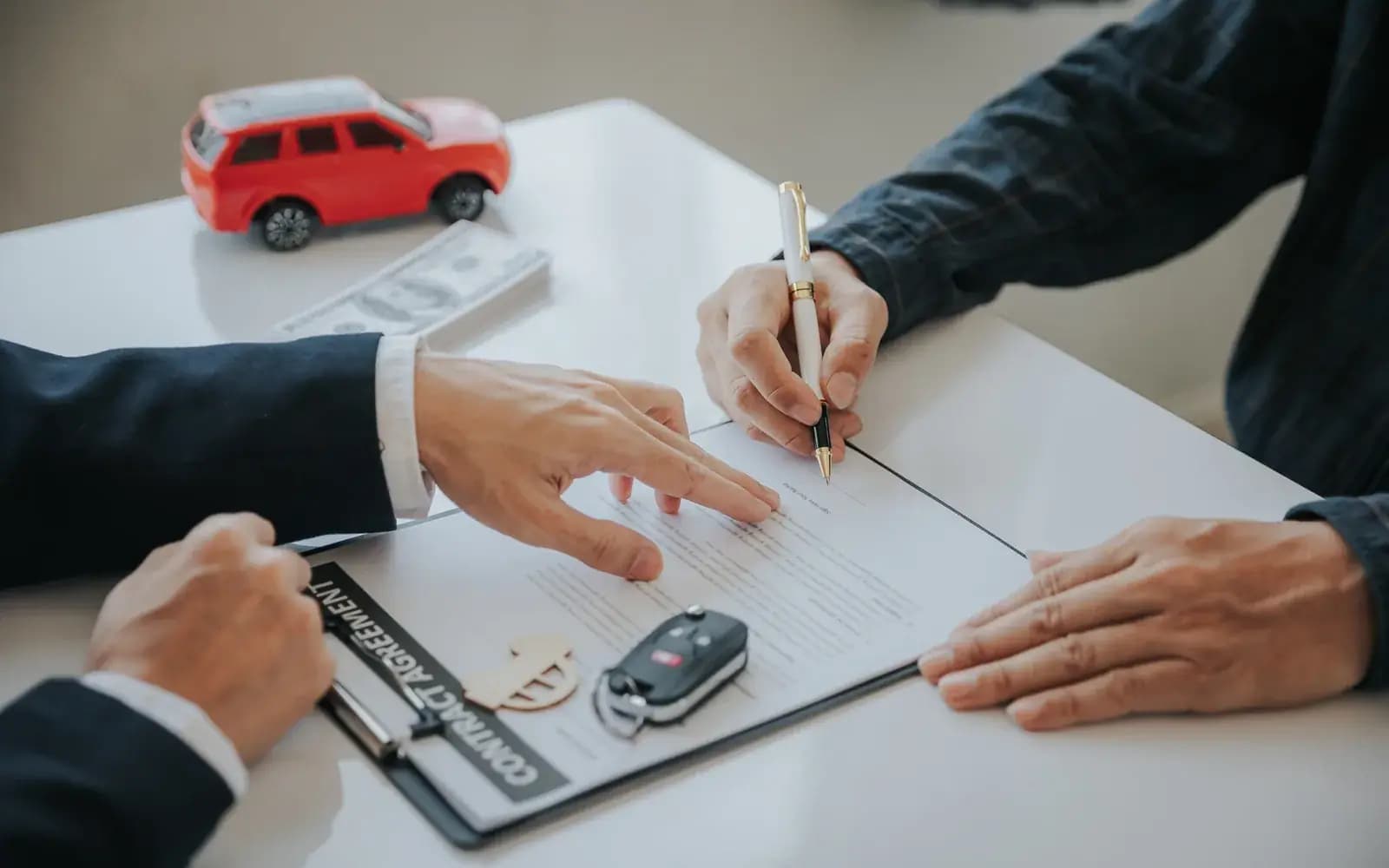
MV-349.1 and MV-82 are not related forms, and you almost never need both for the same reason. MV-349.1 is a notarized affidavit that lets a surviving spouse or minor child transfer a deceased owner's vehicle to someone else without going through Surrogate's Court, capped at a $25,000 vehicle value. MV-82 is New York's general-purpose Vehicle Registration/Title Application, the form nearly every buyer or seller touches at some point to register a vehicle, get it titled, or make almost any change to a registration. They show up in a seller's life for completely different reasons, and confusing them is an easy way to bring the wrong paperwork to a DMV office.
What is Form MV-349.1 actually for?

Form MV-349.1 is a notarized affidavit New York built specifically for one family situation: a surviving spouse, or a child under 21, transferring a deceased owner's car to someone besides themselves, without opening a Surrogate's Court case. According to DMV's guidance for when a family member has passed away, this simplified path only works if the vehicle is the only one in the estate and it's worth $25,000 or less. A surviving spouse transferring the car into their own name doesn't need MV-349.1 at all — their signature on the title, as surviving spouse, handles that directly. The affidavit specifically covers the case where the vehicle is moving to someone else instead, notarized, along with a copy of the death certificate, standing in for the deceased owner's signature on the title.
MV-349.1 is a family-transfer shortcut, not a form every seller ever sees. Most people who encounter it are dealing with a parent's, spouse's, or sibling's car after a death, not a routine sale. If there's no surviving spouse and no minor child, a related but separate affidavit, Form MV-349, covers that gap instead, at the same $25,000 threshold. Our full guide to selling a deceased relative's car in NY walks through which of these paths fits a given family situation, including when the estate is too large or complicated for either affidavit and Surrogate's Court becomes necessary instead. This article isn't trying to repeat that process — it's here to make sure you're not confusing MV-349.1 with the everyday form covered next.
What is Form MV-82 actually for?
MV-82, the Vehicle Registration/Title Application, is the workhorse form at New York DMV. According to DMV's guidance on registering and titling a vehicle, MV-82 is used to register a new vehicle, renew or change a registration, replace a lost registration or plate, transfer plates between vehicles, or apply for a title on its own. A separate version, MV-82TON, applies specifically to a title-only application, without a registration attached, for vehicles from model year 1973 onward. If you've bought a car privately, bought one from a dealer, finished paying off a lease and need the title moved into your name, or you're just renewing your registration, there's a good chance MV-82 is part of that paperwork.
Nearly every seller and buyer in New York fills out an MV-82 at some point — it's not tied to any one unusual situation the way MV-349.1 is. According to DMV's guidance on buying, selling, or transferring vehicle ownership, the buyer submits proof of ownership and proof of sale along with MV-82 to register and title a vehicle after a purchase. Title certificates themselves arrive by mail after processing — DMV's registration guidance notes it can take up to 90 days for the certificate to show up, so don't expect to walk out of a DMV office with the physical title in hand the same day.
When does a seller actually run into MV-82?

A seller isn't usually the one filing MV-82 — that's typically the buyer's job, since it's their registration and title application. But a few situations put it in a seller's hands too. If you're finishing a lease buyout before selling the car, DMV's guidance on changing the name on a title after a lease buyout lists MV-82 or MV-82TON among the documents needed to get the title reissued in your name first, before you can sell it as the owner of record. If your title shows a previous owner's name because of an earlier transfer that didn't get fully processed, DMV's guidance on proof of ownership points to MV-82TON as the fix, an application for title only, to get the title correctly in your name before you try to sell.
MV-349.1 vs. MV-82: the actual difference
The easiest way to keep these straight is by what problem each one solves. MV-349.1 answers a narrow question: how does a car move out of a deceased owner's name to someone other than a surviving spouse or child, without Surrogate's Court, when the estate is simple enough to qualify. MV-82 answers a much broader question: how does a vehicle get registered, titled, or have its registration changed, for essentially any reason, for anyone. If you're settling a family member's estate and the situation matches the surviving-spouse-or-minor-child path, MV-349.1 might apply on top of MV-82, not instead of it — the affidavit clears the way for the transfer, and MV-82 is still the registration paperwork the new owner files afterward. They work together in that specific scenario rather than competing for the same job.
What about MV-349, the form without the ".1"?
It's easy to assume MV-349 and MV-349.1 are the same thing with a typo, but they cover different situations within the same deceased-owner topic. MV-349.1 is specifically for a surviving spouse or minor child transferring the vehicle to someone else. MV-349, without the .1, is the separate affidavit used when there's no surviving spouse, no minor child, and no will — a different gap in the same $25,000-and-under estate-simplification rules. Neither one is interchangeable with MV-82, and neither one replaces the Surrogate's Court process once an estate is too large or complicated for the affidavit route. If you're not sure which of the two deceased-owner forms applies to your family's situation, our deceased relative's car guide walks through exactly how to tell.
MV-82 alongside DTF-802, for a gifted car
MV-82 sometimes travels with a different form than the ones already covered here. If a vehicle changes hands as a gift rather than a sale, whether that's a family member handing down a car or the kind of situation covered under MV-349.1 when a deceased owner's vehicle moves to someone other than the surviving spouse, New York's sales-tax paperwork is separate from the registration paperwork. Our guide to gifting vs. selling a car to family in NY, and DTF-802 explained covers that form in detail. MV-82 still handles the registration and title side of a gifted car the same way it does for a sale; DTF-802 is what tells New York the transaction wasn't a taxable purchase.
What to actually bring with MV-82
Filling out MV-82 by itself doesn't get you through a DMV office. According to DMV's guidance on registering and titling a vehicle, you'll also need proof of ownership, proof of identity, proof of insurance in New York, and the fees due at the time — sales tax, plate or transfer fees, and a title certificate fee are among the charges DMV lists, though the exact totals depend on your specific transaction, so check DMV's own fee calculator rather than assuming a flat number. DMV also requires the vehicle to be insured in New York before you register it, and the guidance specifically notes you have 180 days from your insurance ID card's effective date to complete registration. Showing up with MV-82 filled out but missing one of these pieces is a common reason people end up making a second trip.
What if the title itself is missing on top of any of this?
Filling out the right form doesn't help much if there's no title to attach it to. A lost title normally gets replaced through DMV's duplicate-title process, but that process runs differently for a deceased owner's title than it does for an ordinary lost title, and it's worth knowing which situation you're actually in before you start. Our guide to selling a car with a lost title in New York covers the standard duplicate-title path, and the deceased relative's car guide above covers the version that applies after a death specifically.
A quick example: buying out a lease, then selling
Say you finished a lease buyout on a car in Nassau County and now want to sell it. The title isn't automatically in your name just because you paid off the buyout figure — DMV's lease-buyout guidance has you bring the lease buyout agreement, the original title, and a completed MV-82 or MV-82TON to a DMV office to get the title reissued in your name first. Only after that title certificate arrives, which can take up to 90 days by mail, are you actually the owner of record who can sign it over to a buyer. Skipping that step and trying to sell before the reissue is complete is one of the more common ways a lease-to-sale timeline runs longer than sellers expect. If leasing is the situation you're actually dealing with, our guide on why you can't junk a leased car covers the earlier stage of that same problem, before the buyout happens at all.
Once your paperwork is sorted out
Whichever form got you to a clean title, whether that was MV-349.1 after a family member passed, MV-82 after a lease buyout, or just the ordinary registration paperwork every car eventually needs, an instant offer takes about 60 seconds once you're ready to sell. Towing is free anywhere in New York, and we walk you through the rest of the DMV side, including plate surrender and the FS-6 receipt, so you're not juggling forms on your own.
Quick answers
Do I need both MV-349.1 and MV-82 to sell a deceased relative's car? Possibly, but they're not doing the same job. MV-349.1 clears the way for the transfer itself when a surviving spouse or minor child is moving the car to someone else. MV-82 is the separate registration and title paperwork the new owner files once that transfer is settled.
What's the difference between MV-82 and MV-82TON? MV-82 covers registration and titling together. MV-82TON is for a title-only application, without a new registration, used for vehicles from model year 1973 onward — for example, reissuing a title into your name after a lease buyout.
Is MV-349.1 the same as MV-349? No. MV-349.1 is for a surviving spouse or minor child transferring the car to someone else. MV-349 is a separate affidavit for the same $25,000 threshold, used when there's no surviving spouse, no minor child, and no will.
How long does it take to get a title certificate after filing MV-82? DMV's registration guidance notes the title certificate arrives by mail after processing, which can take up to 90 days. Plan around that if you're trying to sell a car soon after registering or titling it.
Does filing MV-82 work any differently near Rockland County than elsewhere in the state? No. MV-82 is a statewide DMV form, so the process is the same whether you're filing it in Rockland County or anywhere else in New York. Office hours and appointment availability are the only things that vary locally.
The short version
MV-349.1 and MV-82 solve two different problems and almost never substitute for each other. MV-349.1 is a narrow, notarized affidavit for a surviving spouse or minor child transferring a deceased owner's car to someone else, capped at $25,000 in value. MV-82 is the everyday registration and title application nearly every New York vehicle transaction touches at some point, whether that's a private sale, a dealer purchase, or reissuing a title after a lease buyout. If you're settling an estate, you may need both, one to clear the transfer and one to register the car afterward. For almost everything else, MV-82 is the one you're actually looking for.
Get your instant offer
Free towing · No hidden fees · No obligation
Frequently Asked
Will you buy a car that failed NY inspection?
Yes. A failed inspection is one of the most common reasons people call us — and the repair estimate is often worth more than the car. We buy it whether it passed or not.
What kinds of cars do you buy?
Just about anything — running or not, wrecked, flooded, rusted out, or missing parts. We make offers on cars that other buyers pass on.
Do I need the title?
Having the title in hand is best — you'll sign it over in the seller section on the back at pickup. If your title is missing, tell us your situation and we'll walk you through what's possible.
How is my offer calculated?
We price your car based on year, make, model, and condition, plus current scrap value that week. Newer and larger vehicles are generally worth more, but there is no typical figure worth quoting — the number depends on your specific car, so get your own instant offer for the real one.
Is towing really free?
Yes — free towing means $0, no hidden fee, anywhere in New York.
How fast can you pick up?
We move quickly once your offer is accepted. Exact timing depends on your location and schedule, so we'll confirm a pickup window with you directly.
What paperwork do I need in NY?
You'll need your signed-over title, and your plates should come off before pickup. New York requires sellers to surrender plates to the DMV before canceling insurance, and the DMV issues an FS-6 receipt for the surrender — we'll walk you through it.
What happens to my plates?
Remove your plates before we arrive for pickup. You'll then surrender them to the DMV and keep the FS-6 receipt as your proof of surrender — check dmv.ny.gov for details on the process.
When and how do I get paid?
You get paid at pickup once the vehicle and paperwork are confirmed — no waiting around for a check in the mail.
We’ll Buy It.
Because when it comes down to it, junk cars are our thing. Anywhere in New York.