Selling a Deceased Relative's Car in NY
7 min read · June 8, 2026 · Updated August 15, 2026

New York lets a surviving spouse, or a child under 21, transfer a deceased owner's car without probate court, as long as it's the only vehicle in the estate and it's worth $25,000 or less — above that, or with more than one car, the route changes. Past that line, the right path depends on who survived the owner, whether there's a will, and how many vehicles are involved. None of this is something most families think about until they suddenly need to, and sorting out DMV paperwork while grieving makes an ordinary task feel much heavier than it should. It also isn't something you have to get right on the first try; the process exists precisely because families end up here without warning. There's a clear order to work through: start with who's still living, then check the car's value, and the right form follows from there. If you'd rather skip the legal detail for now and just want the practical version of getting rid of a car you've inherited, our guide to selling a junk car you inherited covers that softer starting point.
Start here: who survives, and what is the car worth?
Two questions decide which New York process applies: who survived the owner, and what the car is worth. According to DMV's guidance for when a family member has passed away, a surviving spouse or a child under 21 can inherit one vehicle worth $25,000 or less without probate at all. If neither a spouse nor a minor child survives, and there's no will, a separate form covers that same $25,000 threshold. And if the estate includes more than one vehicle, or this one car is worth more than $25,000, neither simplified path applies, and the car becomes part of the broader estate instead, with its own court process. Read through the next few sections in order. The first one that matches your family's situation is the one you need, and you can stop reading once you find it.
If you're the surviving spouse, or the car goes to a child under 21
When a surviving spouse or a child under 21 is next in line, the car transfers without probate court, as long as it's the only vehicle in the estate and it's worth $25,000 or less. A surviving spouse signs the title directly, as surviving Spouse, and that signature alone completes the transfer into their name, with no additional affidavit needed for that specific transfer. Moving the car to someone else instead, a different family member who isn't the spouse, for instance, takes an extra step: the notarized Form MV-349.1 affidavit, along with a copy of the death certificate. That combination stands in for the deceased owner's signature on the title. This is the simplest of the paths described here, and it's the one most families in this exact situation will end up using.
If there's no surviving spouse or minor child, and no will
When there's no surviving spouse, no child under 21, and no will, New York has a separate affidavit built for that exact gap: Form MV-349, capped at the same $25,000 value. It works in the same spirit as the spouse's path, a simplified way to move one vehicle without a full Surrogate's Court proceeding, but it's meant for whoever is next in line to inherit under New York law when no will says otherwise. That's often a sibling, a parent, or an adult child of the deceased, but exactly who qualifies depends on the family situation. If you're not certain you're the right person to sign, that's worth confirming before filling anything out, since the form itself won't resolve a dispute about who should be signing it.
When there's a will, more than one vehicle, or the car is worth over $25,000
None of the paths above apply once the estate gets more complicated: a will that names an executor, more than one vehicle in the estate, or a single car worth more than $25,000. At that point, the car becomes part of the estate itself, and moving it requires Surrogate's Court involvement rather than a DMV affidavit. If there's a will, the court issues Letters Testamentary to the executor it names. If there's no will, the court appoints an administrator instead and issues Letters of Administration. Smaller estates sometimes qualify for a simpler Voluntary Administrator's affidavit rather than full Letters. Which of these three routes fits depends on the estate's size and whether a will exists, and it's worth asking Surrogate's Court staff directly rather than guessing, since getting it wrong can mean redoing paperwork later. Once Letters are issued, the executor or administrator has the legal authority to sign the title over on the estate's behalf, including for a sale, not just to move the car into a family member's name.
What if the title is from another state?
An out-of-state title in the deceased owner's name changes things regardless of who survives them. Neither Form MV-349 nor MV-349.1 can be used on an out-of-state title at all; only an executor or administrator with court letters can transfer it. This trips up families who assume the same $25,000 affidavit rule applies no matter where the title was issued. If the car you're dealing with was titled in another state, plan on the Surrogate's Court path from the start, rather than trying the simplified affidavits first and finding out later that they don't apply. Our guide on the executor-only path for a deceased owner's out-of-state title walks through that Surrogate's Court process in more depth.
What if the title itself is missing?
Grief has a way of scattering paperwork, and it's common for a title to simply not turn up when a family needs it. Normally, a lost title gets replaced with a duplicate for a $20 fee, and DMV usually processes that request online with a next-business-day turnaround. That online shortcut, though, comes with a restriction worth knowing here: it isn't available for deceased-owner titles. This route has to go through the standard mail or in-person request instead, which takes longer than the usual online timeline. Our guide to selling a car with a lost title in New York covers the duplicate-title process in full. Budget extra time for it here, and don't let a missing title stall the rest of the paperwork. The affidavit or court process and the duplicate-title request can move forward at the same time instead of one waiting on the other.
Once you're cleared to sell the car
Once the title is in your name, whether through the surviving-spouse signature, an affidavit, or a full Surrogate's Court transfer, selling the car works the same as it would for anyone else. You'll still need to handle plate surrender the way any New York seller does, and our plate surrender and title guide covers that step by step. Our broader overview of how to sell a junk car in New York is also worth a look if this is the first time you've handled a car sale, especially under circumstances nobody plans for and nobody wants to research twice.
When you're ready to let the car go
Once the paperwork is settled, however that ends up looking for your family, you don't have to do anything else with the car if you'd rather not. CashMyCarNY buys cars other buyers pass on, including ones that have been sitting unused for months, not running, missing parts, whatever condition it's in after sitting untouched. An instant offer takes about 60 seconds, towing is free anywhere in New York, and we come to you rather than the other way around. If the paperwork itself still feels unresolved, tell us your situation and we'll walk you through what's possible. You don't need every form sorted out before you reach out.
Quick answers for families settling an estate
What's the actual difference between MV-349 and MV-349.1? Form MV-349.1 is for a surviving spouse or minor child transferring the car to someone else besides themselves, and it needs to be notarized along with a copy of the death certificate. Form MV-349 is the separate affidavit used when there's no surviving spouse, no minor child, and no will at all. Both are capped at a vehicle worth $25,000 or less.
Do I need Letters Testamentary to sell a deceased relative's car in NY? Only if the estate doesn't qualify for the simplified affidavits, for example if there's more than one vehicle, the car is worth over $25,000, or a will names an executor for a larger estate. Letters Testamentary come from Surrogate's Court and formally name the executor. If MV-349 or MV-349.1 applies instead, you won't need Letters just for the car.
If we're settling this near Buffalo, does the process work any differently in Erie County? No. MV-349, MV-349.1, and the $25,000 threshold are the same statewide DMV rules whether the car is in Erie County or anywhere else in New York. If Surrogate's Court involvement turns out to be necessary, that filing happens at the county level, but the DMV side of transferring the car doesn't change by region.
Can I order a duplicate title online if the owner has passed away? No. DMV's online duplicate-title option specifically excludes deceased-owner titles, so that request has to go through the mail or in person instead of the usual next-business-day online process. Our lost-title guide walks through what that slower version looks like.
The short version
New York simplifies this in two common cases: a surviving spouse or child under 21 inheriting one car worth $25,000 or less, no probate needed, or, absent those, an affidavit under Form MV-349 with the same $25,000 cap. Anything bigger than that, more than one vehicle, a higher-value car, or an out-of-state title, needs Surrogate's Court and an executor or administrator with Letters. Figure out which category the estate falls into first, since that determines every form that follows. If the title is also missing, that's a slower but separate fix, not a reason to stall the rest of the process while you wait on it.
Get your instant offer
Free towing · No hidden fees · No obligation

Frequently Asked
Will you buy a car that failed NY inspection?
Yes. A failed inspection is one of the most common reasons people call us — and the repair estimate is often worth more than the car. We buy it whether it passed or not.
What kinds of cars do you buy?
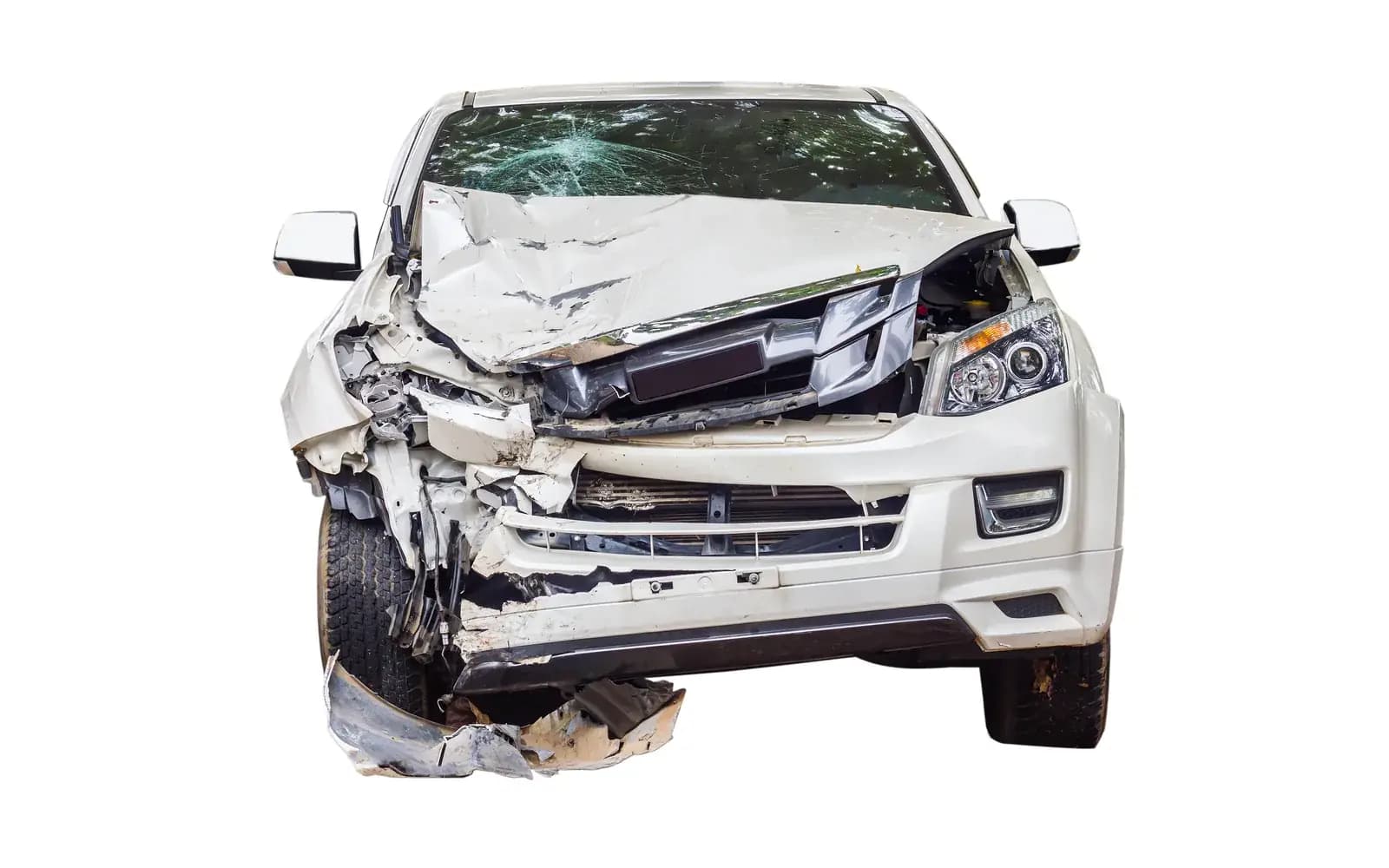
Just about anything — running or not, wrecked, flooded, rusted out, or missing parts. We make offers on cars that other buyers pass on.
Do I need the title?
Having the title in hand is best — you'll sign it over in the seller section on the back at pickup. If your title is missing, tell us your situation and we'll walk you through what's possible.
How is my offer calculated?
We price your car based on year, make, model, and condition, plus current scrap value that week. Newer and larger vehicles are generally worth more, but there is no typical figure worth quoting — the number depends on your specific car, so get your own instant offer for the real one.
Is towing really free?
Yes — free towing means $0, no hidden fee, anywhere in New York.
How fast can you pick up?
We move quickly once your offer is accepted. Exact timing depends on your location and schedule, so we'll confirm a pickup window with you directly.
What paperwork do I need in NY?
You'll need your signed-over title, and your plates should come off before pickup. New York requires sellers to surrender plates to the DMV before canceling insurance, and the DMV issues an FS-6 receipt for the surrender — we'll walk you through it.
What happens to my plates?
Remove your plates before we arrive for pickup. You'll then surrender them to the DMV and keep the FS-6 receipt as your proof of surrender — check dmv.ny.gov for details on the process.
When and how do I get paid?
You get paid at pickup once the vehicle and paperwork are confirmed — no waiting around for a check in the mail.
We’ll Buy It.
Because when it comes down to it, junk cars are our thing. Anywhere in New York.