Open Insurance Claim on the Car — Can You Sell Mid-Claim?
5 min read · June 7, 2026 · Updated August 15, 2026
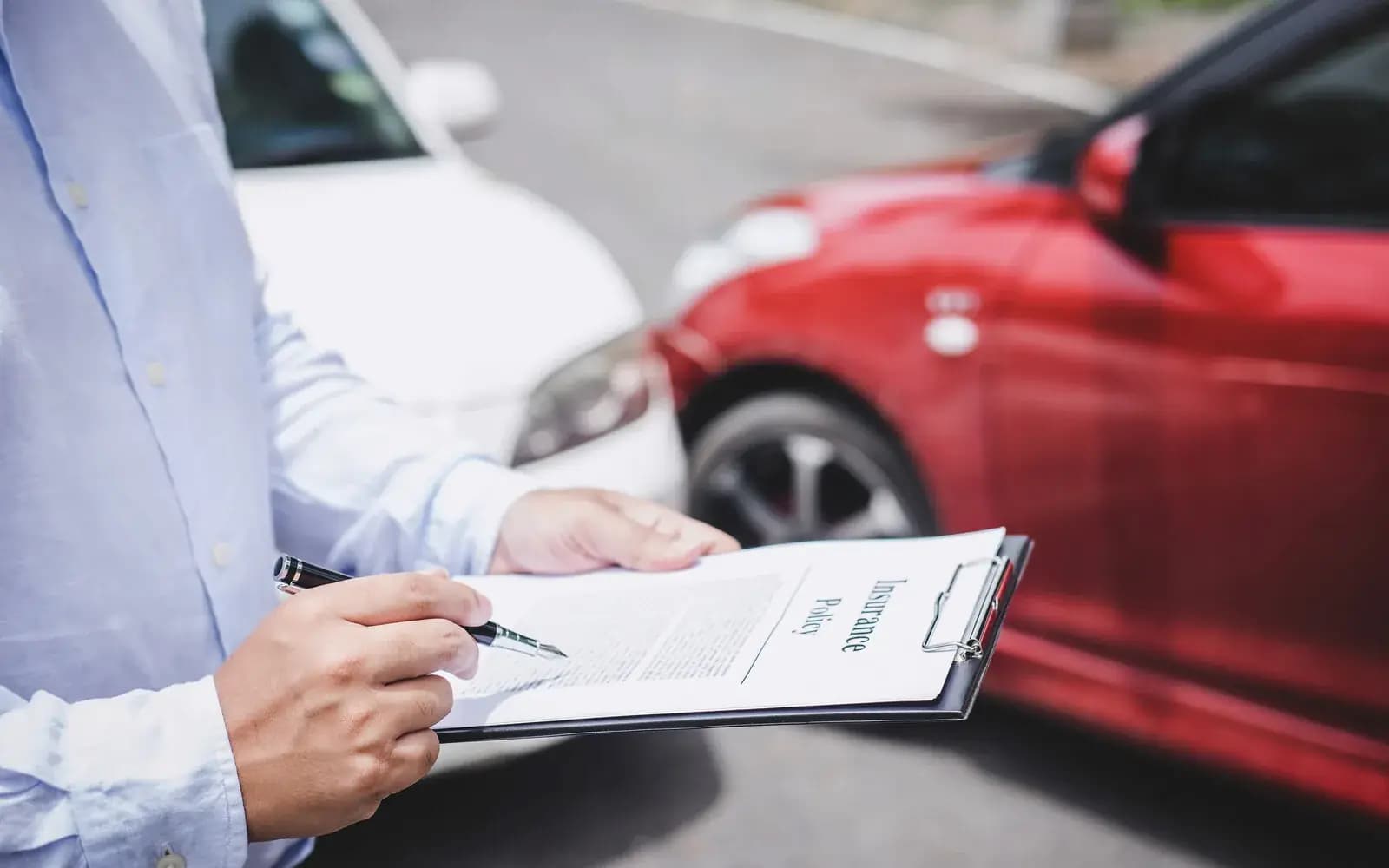
Selling a car in New York doesn't require an insurance claim to be closed first — nothing in the state's title-transfer paperwork checks claim status one way or the other. What complicates a mid-claim sale isn't the DMV, it's the insurance side: who's entitled to any settlement, and whether your insurer or a lienholder needs to weigh in before you hand over the keys. This covers the window before a total-loss decision has been made. Once that call is final, the paperwork and the picture both change.
The window this post actually covers
An open claim just means an insurer is still evaluating the damage — nothing has been decided yet. Once a total-loss call is actually made, New York's salvage rules take over, including the 75%-of-value threshold that triggers an MV-907A salvage certificate; our guide on totaled by insurance, can I still sell the car picks up exactly at that point, including what changes once you're offered a settlement. This post covers the earlier stage: damage reported, an adjuster involved, no final determination yet. If your claim has already been decided, that other guide is the one that applies to you now.
Who's entitled to the settlement if you sell first?
This is the part that doesn't have a clean, published answer. The research behind this guide didn't turn up a standardized New York rule for how a claim settlement gets handled if you sell the car before the claim resolves. That detail lives in your policy and your adjuster's file, not in a DMV or DFS regulation, so the fastest way to get a real number for your situation is asking your adjuster directly, in writing, before you finalize anything. If the claim later resolves as a total loss and you'd rather keep the car than hand it over, that's a separate path called owner-retained salvage — our guide on keeping your totaled car and selling it later covers that option in depth.
Telling your insurer, and telling your buyer
Before you accept an offer, tell your insurer you're planning to sell while the claim is still open. It's a short conversation, and it heads off a mismatch between what the claim file says and what actually happened to the car. The same goes for the buyer's side: whatever damage triggered the claim is condition information a buyer needs, the same as any other mechanical or body issue you'd disclose on a sale. Skipping either conversation doesn't make the claim disappear — it just means a surprise shows up for someone later.
If there's still a loan on the car
If you're still making payments, the lender's lien doesn't disappear just because the claim is open — it stays attached to the title, and it usually stays attached to any insurance payout tied to the car too. Loop your lender in the same way you loop in your insurer: tell them the claim is open and that you're considering a sale, and ask directly how their payoff process works if the claim resolves as a total loss instead.
That question matters most if the claim later resolves as a total loss, because the payout and the loan interact differently than they do in a simple private sale. An insurance settlement for a totaled car is typically based on the car's actual cash value, not on what's left on the loan, and those two numbers don't have to match. If you owe more on the loan than the car was worth, you can end up on the hook for the difference unless a gap insurance policy is in place to cover it. Whether you have gap coverage, and exactly what it pays for, is a question for your policy documents or your lender directly — it isn't something a DMV or insurance-regulation page settles in general terms.
Who actually receives the settlement check also depends on the lien. Insurers commonly route the payout toward satisfying the loan balance first — sometimes paying the lender directly, sometimes issuing a check made out to both you and the lender — with anything left over going to you. The exact mechanics vary by insurer and lender, so if you want a specific answer for your loan, your lender's payoff department and your insurer's claims adjuster are the two calls to make, not a general guide.
That's a different question from selling a financed car while the claim is still open and undecided, which is what the rest of this post covers. Once a total-loss decision is final, our guide on totaled by insurance, can I still sell the car picks up from there.
What about canceling the insurance itself?
If you're also thinking about canceling the policy once the sale closes, New York's cancellation and renewal rules set notice requirements for insurer-initiated cancellations — at least 20 days' notice, or 15 days if the reason is non-payment. Those rules don't say anything about what happens to an open claim specifically, since that's a claims-department question, not a cancellation-notice one. Keep the two separate in your head: canceling the policy and resolving the claim are different processes that happen to involve the same insurer. None of this changes if the title itself is also missing — that's a separate, fixable problem, and our guide on selling a car with a lost title in New York walks through it on its own.
If waiting on the claim isn't worth it
An open claim can drag for weeks with no fixed end date, and not every owner wants to wait it out. An instant offer takes about 60 seconds and doesn't run on an adjuster's schedule. If the car matches what you described, the price doesn't change once we show up, towing is free anywhere in New York, and payment happens at pickup. See how the pickup process works if you want the full picture before deciding whether to sell now or wait the claim out.
Quick answers about selling mid-claim
Can I sell my car in NY before an insurance claim is finished? Generally, yes — New York's title-transfer paperwork doesn't check claim status. The open questions are on the insurance side: settlement rights and any lienholder interest, which are worth confirming with your adjuster before you finalize a sale.
What happens to the claim payout if I sell the car first? There's no standardized state rule for this that the research behind this guide could confirm. It depends on your policy and how your adjuster's file is set up, so get that answer directly from your insurer rather than assuming.
Does selling the car automatically close the insurance claim? Not automatically, as far as this guide could confirm. Selling the car and resolving the claim are generally separate steps, so ask your insurer whether the claim needs to be formally closed or withdrawn on its own.
Does any of this work differently in Syracuse than the rest of New York? No. Insurance and DMV rules apply the same statewide, including in Onondaga County — nothing about claim status or title transfer changes by region.
Do I still have to make payments on a totaled car with gap insurance? Until the claim is settled and the loan is paid off, yes — a total-loss declaration doesn't pause your loan payments on its own. If you have gap insurance, it's designed to cover the difference between what the settlement pays and what you still owe, but confirm the payment timeline and any remaining balance directly with your lender rather than assuming payments stop the moment the car is declared a total loss.
Who gets the insurance check when a car is totaled? If there's a lien on the car, the lender is typically paid first out of the settlement, either directly or through a check made out to both you and the lender, with anything left over going to you. If there's no lien, the settlement goes straight to you. The exact process varies by insurer and lender, so confirm with both if you want specifics for your claim.
The short version
New York's title-transfer rules don't require an insurance claim to be closed before you sell, but that's only half the picture. This window applies before a total-loss decision is made; once that call is final, our totaled-by-insurance guide takes over. What isn't settled by any public rule is who gets the settlement money if you sell first, so put that question to your adjuster in writing, loop in any lienholder, and keep the cancellation conversation separate from the claims conversation. Get those answers before you commit to a sale date, not after.
Get your instant offer
Free towing · No hidden fees · No obligation
Frequently Asked
Will you buy a car that failed NY inspection?
Yes. A failed inspection is one of the most common reasons people call us — and the repair estimate is often worth more than the car. We buy it whether it passed or not.
What kinds of cars do you buy?
Just about anything — running or not, wrecked, flooded, rusted out, or missing parts. We make offers on cars that other buyers pass on.
Do I need the title?
Having the title in hand is best — you'll sign it over in the seller section on the back at pickup. If your title is missing, tell us your situation and we'll walk you through what's possible.
How is my offer calculated?
We price your car based on year, make, model, and condition, plus current scrap value that week. Newer and larger vehicles are generally worth more, but there is no typical figure worth quoting — the number depends on your specific car, so get your own instant offer for the real one.
Is towing really free?
Yes — free towing means $0, no hidden fee, anywhere in New York.
How fast can you pick up?
We move quickly once your offer is accepted. Exact timing depends on your location and schedule, so we'll confirm a pickup window with you directly.
What paperwork do I need in NY?
You'll need your signed-over title, and your plates should come off before pickup. New York requires sellers to surrender plates to the DMV before canceling insurance, and the DMV issues an FS-6 receipt for the surrender — we'll walk you through it.
What happens to my plates?
Remove your plates before we arrive for pickup. You'll then surrender them to the DMV and keep the FS-6 receipt as your proof of surrender — check dmv.ny.gov for details on the process.
When and how do I get paid?
You get paid at pickup once the vehicle and paperwork are confirmed — no waiting around for a check in the mail.
We’ll Buy It.
Because when it comes down to it, junk cars are our thing. Anywhere in New York.