How to Surrender Your License Plates in New York
9 min read · July 10, 2026 · Updated September 7, 2026
You can surrender New York plates two ways: by mail to Albany, or in person at a DMV office for a $1 fee. Either way you complete a PD-7 application for each set of plates, and you get an FS-6T receipt proving you did it.
One rule sits above all of this, and New York states it first for a reason: surrender the plates before you cancel the insurance. Not after.
Do I need an appointment to surrender plates in New York?
This is the most-asked question in the whole topic, and the honest answer is it depends on your office.
DMV does not publish a blanket appointment rule for plate surrender. Its guidance points you to the location, instructions and reservation information for your specific DMV, because county offices set their own arrangements — some take walk-ins, some want a reservation.
So: check your own office before you drive over. And if you would rather not deal with the question at all, the mail route below has no appointment, no line, and no office hours.
Surrendering by mail
The mail route is the one most people should use, particularly if the car is already gone.
Before you send anything, check your address is current. DMV mails the FS-6T receipt — and a refund check if one is due — to the address on the registration. If that address is out of date, change it before you mail the plates. If you are moving, file a change of address with the Postal Service as well so the receipt forwards.
Then:
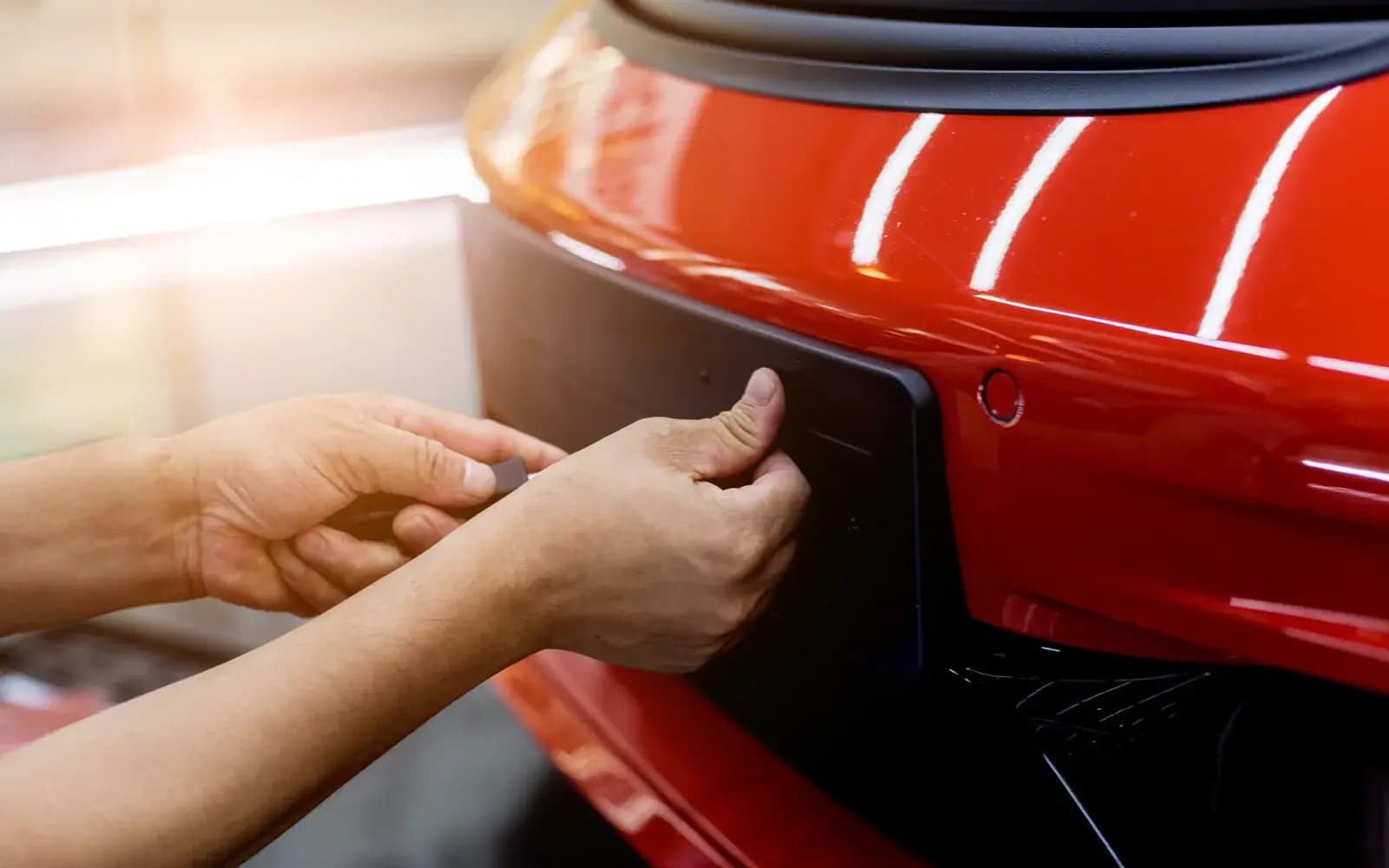
- Remove the plates and the stickers. This includes plate frames and fasteners — DMV will not accept plates with them still attached. Destroy the registration and inspection stickers from the windshield.
- Complete a PD-7 application for each set of plates you are surrendering.
- Mail the application with the plates in an envelope — no boxes — to:
> NYS DMV > 6 Empire State Plaza, Room B240 > Albany, NY 12228
Two details worth knowing. The postmark date counts as your surrender date, which matters if you are racing an insurance cancellation. And allow 21 days for the FS-6T to arrive. If it does not turn up, contact DMV rather than assuming it is in transit.
Surrendering at a DMV office
Same preparation — plates and stickers off, frames and fasteners removed, PD-7 completed for each set — then bring the plates and the form to a DMV office.
County motor vehicle offices charge a $1 fee to process the surrender. You walk out with the FS-6T rather than waiting three weeks for it, which is the main reason to choose this route over the mail.
The frames-and-fasteners rule catches people out
It is worth pulling out because it is the single most common reason a surrender gets bounced: DMV will not accept plates with frames or fasteners attached.
That dealer-branded frame, the four screws, the plastic surround — all of it comes off first. Bare plates only. This applies to both routes, and by mail it is worse, because a rejected envelope costs you weeks rather than a trip back to the parking lot.
Can someone else surrender my plates for me?
Yes, with one condition DMV states directly: do not give your plates to another person unless that person will actually surrender them for you.
And if someone else does it on your behalf, make sure they give you the FS-6T receipt. That document is the proof, and it is worth nothing sitting in somebody else's glovebox.
Plates first, then insurance — and what happens if you reverse it
New York leads its own guidance with this: before you cancel the vehicle's liability insurance coverage, you must surrender the plates and registration.
The consequence for getting it wrong is not vague. DMV states that if you do not turn in your plates, it will suspend your registration and can suspend your driver license. Clearing a suspended registration comes down to two routes, and one of them is surrendering the plates you are reading about here. There is also a civil penalty attached to an insurance lapse — DMV's insurance lapse civil penalty page covers how that is calculated and paid.
So the order is not a formality. Cancel insurance or surrender plates first goes through the sequence in detail, including what to do if you have already done it backwards.
One more case in the same family: if you are registering the vehicle in another state, you still surrender the New York plates to New York DMV. Moving away does not remove the obligation.
The FS-6T receipt, and why it matters after the car is gone
The FS-6T is the document that fixes the date your responsibility for that vehicle ended.
That matters more than it sounds. If the car later collects a parking ticket, a toll violation or a camera notice, the receipt is what establishes the plates were already back with the state. Pair it with the bill of sale naming who bought the car, and you have both halves — who took it, and when you stopped being answerable for it.
Keep it somewhere you will find it in two years. What the FS-6T receipt is and why it matters goes further into the document itself.
Will you get a refund?
Sometimes. DMV's answer is "it depends," and it maintains a separate page on registration refunds for surrendered plates because the calculation turns on how much of the registration period is left and what kind of registration it was.
Two practical points. A refund check, where one is owed, goes to the address on the registration — the same reason to update that address before mailing anything. And a refund is not automatic acknowledgement that the surrender was processed; the FS-6T receipt is the document that proves it, and that is the one to chase if it does not arrive.
If the FS-6T never turns up
Twenty-one days is the window DMV gives for the mail route. If nothing has arrived after that, contact DMV rather than waiting longer or assuming it was lost in the mail.
This matters because the gap between "I mailed my plates" and "I have proof I mailed my plates" is exactly where problems live. The postmark date is your surrender date, so keep proof of postage until the receipt arrives — a mailing receipt costs nothing and covers the interval.
If someone surrendered the plates on your behalf at an office, chase them for the FS-6T rather than DMV. It was handed over at the counter.
Cases where the answer is different
DMV addresses several situations that do not follow the ordinary path:
Motorcycle plates. Not necessary to surrender — but the motorcycle must be insured if you ride it.
Trailer plates. Some trailers do not need liability insurance, but you must surrender the plate if the trailer does not have a valid registration.
Lost, stolen or destroyed plates. You still have to report them and surrender the registration. DMV can then issue a new registration and plates.
Storing a car for the season. There is a temporary surrender route specifically for this, so plates can go back for a winter without permanently giving up the registration.
Plates from another state. Surrender those to the state that issued them, not to New York.
Refunds. Whether one is due depends on the circumstances; DMV has a separate page on registration refunds for surrendered plates.
What if the car is already gone?
A common situation: the car was towed away days ago and the plates are sitting on a shelf.
Nothing about that is a problem. The plates are yours, not the vehicle's, and the surrender is a separate transaction from the sale — you can mail them the week after the car leaves. What you should not do is leave them on the shelf indefinitely, because the registration stays live in DMV's records until they come back, and that is what triggers the suspension.
If the car left with the plates still on it, contact the buyer. A licensed buyer will not want them either.
Selling the car as well
Plate surrender is one step in a longer sequence when the car is being sold or scrapped — how to junk a car in New York lays out the full order, and the New York bill of sale covers the paperwork that travels with it.
If the car has not sold yet, a free instant offer takes about a minute and includes towing anywhere in New York — so you can take the plates off, get the FS-6T, and have the car collected without driving it anywhere.
Quick answers
How do I surrender my plates in New York? Remove the plates and stickers — including frames and fasteners, which DMV will not accept — complete a PD-7 application for each set, then either mail them to NYS DMV at 6 Empire State Plaza, Room B240, Albany NY 12228, or bring them to a DMV office for a $1 fee.
Do I need an appointment to surrender plates in NY? It depends on the office. DMV does not publish a blanket rule and instead points to the location and reservation information for your specific DMV, so check yours. The mail route avoids the question entirely.
Can I surrender my NY plates by mail? Yes. Complete the PD-7, remove frames and fasteners, and mail the plates in an envelope — not a box — to the Albany address. Your postmark date counts as the surrender date, and the FS-6T receipt takes about 21 days to arrive.
Can someone else surrender my plates for me? Yes. DMV's rule is not to hand your plates to anyone unless they are actually going to surrender them, and if they do it for you, make sure they pass the FS-6T receipt back to you.
What happens if I cancel my insurance first? DMV states that if you do not turn in your plates it will suspend your registration and can suspend your driver license, and an insurance lapse carries a civil penalty. Surrender first, then cancel.
Do I have to surrender New York plates if I move to another state? Yes. Registering the vehicle elsewhere does not release you — the New York plates go back to New York DMV.
The short version
Take the plates off with the frames and fasteners removed, destroy the windshield stickers, fill in a PD-7 for each set, and either mail them to Albany or hand them in at a DMV office for a dollar.
By mail, the postmark is your surrender date and the FS-6T takes about three weeks. In person, you leave with the receipt.
Do it before you cancel the insurance, keep the FS-6T, and check your own office's rules before making the trip.
Get your instant offer
Free towing · No hidden fees · No obligation
Frequently Asked
Will you buy a car that failed NY inspection?
Yes. A failed inspection is one of the most common reasons people call us — and the repair estimate is often worth more than the car. We buy it whether it passed or not.
What kinds of cars do you buy?
Just about anything — running or not, wrecked, flooded, rusted out, or missing parts. We make offers on cars that other buyers pass on.
Do I need the title?
Having the title in hand is best — you'll sign it over in the seller section on the back at pickup. If your title is missing, tell us your situation and we'll walk you through what's possible.
How is my offer calculated?
We price your car based on year, make, model, and condition, plus current scrap value that week. Newer and larger vehicles are generally worth more, but there is no typical figure worth quoting — the number depends on your specific car, so get your own instant offer for the real one.
Is towing really free?
Yes — free towing means $0, no hidden fee, anywhere in New York.
How fast can you pick up?
We move quickly once your offer is accepted. Exact timing depends on your location and schedule, so we'll confirm a pickup window with you directly.
What paperwork do I need in NY?
You'll need your signed-over title, and your plates should come off before pickup. New York requires sellers to surrender plates to the DMV before canceling insurance, and the DMV issues an FS-6 receipt for the surrender — we'll walk you through it.
What happens to my plates?
Remove your plates before we arrive for pickup. You'll then surrender them to the DMV and keep the FS-6 receipt as your proof of surrender — check dmv.ny.gov for details on the process.
When and how do I get paid?
You get paid at pickup once the vehicle and paperwork are confirmed — no waiting around for a check in the mail.
We’ll Buy It.
Because when it comes down to it, junk cars are our thing. Anywhere in New York.