Road Salt, Rust, and Your Car's Lifespan
3 min read · July 10, 2026 · Updated August 8, 2026
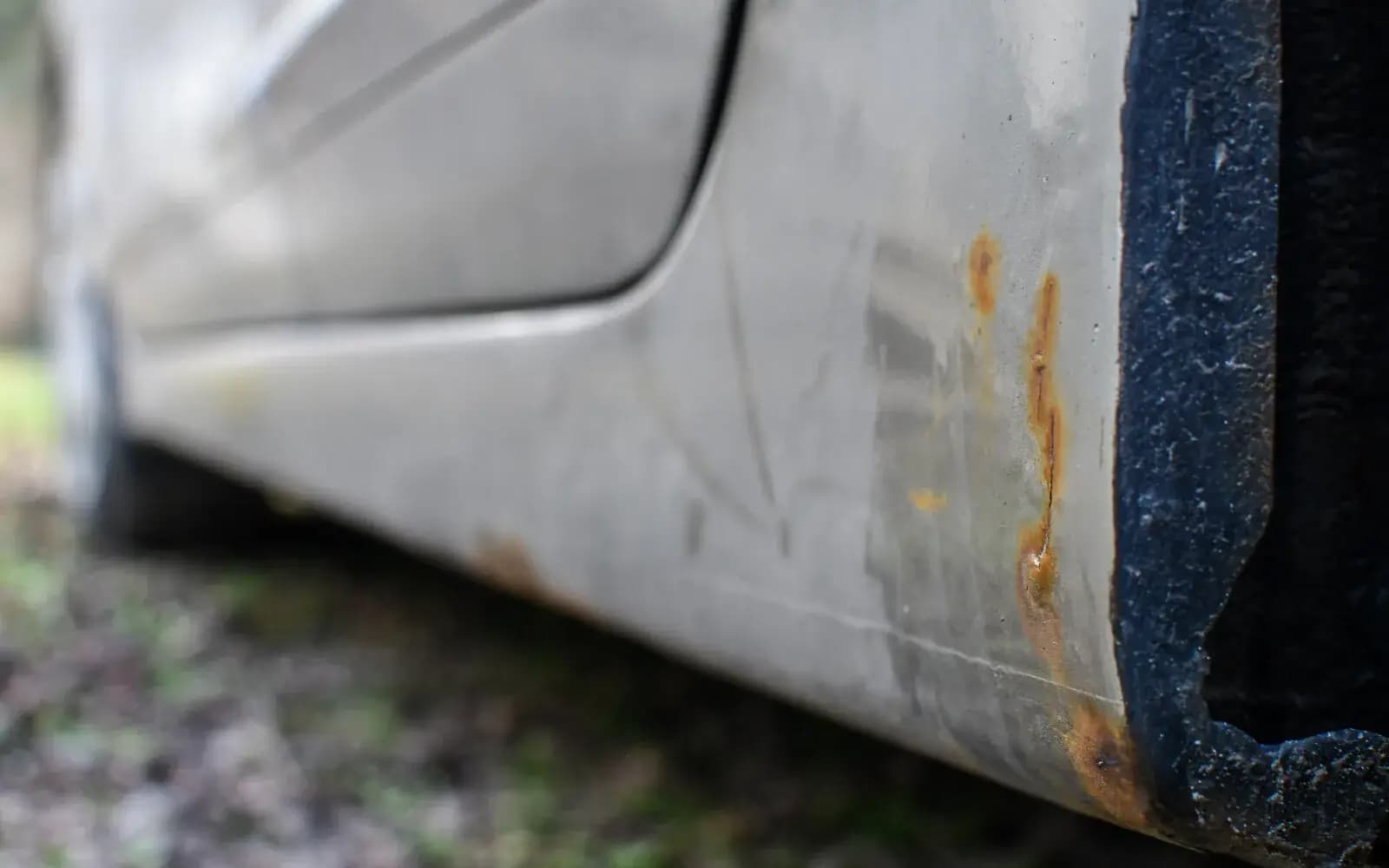
If you've owned a car in New York through a few winters, you've probably noticed something drivers in drier climates don't have to deal with as much: rust creeping in well before the rest of the car seems old. That's not your imagination, and it's not bad luck — it's road salt, and it's one of the most consistent reasons New York cars have shorter usable lifespans than the same models driven somewhere warmer and drier.
Why road salt is so hard on a car
Salt is spread on New York roads through the winter to keep them from icing over, and it works well for that purpose. The problem is what happens after it's done its job on the road: it gets kicked up onto the underside of every car that drives over it, mixes with slush and moisture, and clings to metal surfaces for days or weeks at a time. Salt speeds up corrosion by helping moisture do its damage to bare metal faster than moisture alone would.
The undercarriage takes the brunt of it, since that's the part of the car most directly exposed to spray off the road. But salt-laden slush doesn't stay confined to just the underside — it splashes up into wheel wells, settles into seams and joints, and works its way toward other vulnerable areas over the course of a season.
Where the damage shows up
A few areas tend to show salt damage before the rest of the car does:
- The undercarriage and frame — the structural backbone of the vehicle, and the part most exposed to salt spray.
- Brake lines — these run along the underside of the car and can corrode from the outside in, sometimes with no obvious warning before a failure.
- Exhaust systems — mufflers, pipes, and other exhaust components are constantly exposed underneath the car and often rust through years before the engine they're attached to shows its age.
- Wheel wells and rocker panels — visible spots where you can often catch early rust before it spreads further.
The undercarriage and frame deserve special attention on their own. Unlike cosmetic rust on trim or panels, structural rust there can affect whether the vehicle can safely support repairs at all — or continue passing inspection — which is why it's usually the first thing worth having checked.
Why this matters more in New York specifically
A car driven its whole life in a place with mild, dry winters simply doesn't face this kind of repeated exposure. New York's combination of salted roads, wet winters, and freeze-thaw cycles creates conditions that accelerate rust in a way climate alone wouldn't in a drier state. This effect is especially pronounced across the upstate rust belt, where heavier snowfall and more freeze-thaw cycles compound the same salt exposure every other New York car deals with. Two identical cars, same age and mileage, can end up in very different structural condition depending on whether one spent its winters in New York and the other didn't.
Signs the rust has become serious
Surface rust on paint or trim is cosmetic and usually not urgent. What you want to watch for is rust that's moved past the surface:
- Visible rust-through — actual holes, not just discoloration — in the frame, floor pans, or wheel wells
- Soft or flaking metal you can push a finger through or flake off with a fingernail
- A soft or spongy brake pedal, which can point to corroded brake lines
- Visible corrosion or holes anywhere along the exhaust system
- Rust around suspension mounting points or other structural connections
Any of these is worth having looked at by someone who can assess how far it's spread. Rust at this stage is also a common reason for failing state inspection year after year, which is often what forces the issue in the first place.
When repair stops making sense
At some point, the rust isn't a repair problem anymore — it's a question of whether the underlying structure can still safely support repairs at all. When rust has reached the frame or other structural points, when brake lines are compromised, or when the hassle of chasing down each new spot starts to outweigh what the car is worth to you, that's usually the signal that selling makes more sense than continuing to patch things up. If you're weighing whether to fix it anyway, the repair-vs-sell math lays out how to compare the two honestly.
A car in that condition doesn't need to be running or look presentable to be sold — it just needs to still be a car. Yes, you can sell a car that doesn't run, and the same is true if it's a car that's sat for years while the rust worked on it. If road salt has caught up with yours, moving it along as a junk car is often the more practical option than sinking more time and effort into a structure that salt has already been working against for years. A free instant offer prices it as it sits, rust and all, with towing included anywhere in New York.
Quick answers
- Does road-salt rust affect price differently than mechanical damage? Not as a separate category — buyers price by scrap weight, condition, and completeness rather than damage type, so the most accurate way to know is to see what your junk car is actually worth with a real offer instead of assuming a rust discount.
- Do upstate NY cars rust out faster than downstate cars? More freeze-thaw cycles and heavier road salting in places like Buffalo, Rochester, and Syracuse mean more repeated exposure per winter — see the upstate rust belt for how that plays out.
- Is lake-effect snow worse for rust? Lake-effect regions like Erie County see more frequent snow events, typically meaning more frequent salting through the season — worth watching for the rust signs above sooner.
Get your instant offer
Free towing · No hidden fees · No obligation
Frequently Asked
Will you buy a car that failed NY inspection?
Yes. A failed inspection is one of the most common reasons people call us — and the repair estimate is often worth more than the car. We buy it whether it passed or not.
What kinds of cars do you buy?
Just about anything — running or not, wrecked, flooded, rusted out, or missing parts. We make offers on cars that other buyers pass on.
Do I need the title?
Having the title in hand is best — you'll sign it over in the seller section on the back at pickup. If your title is missing, tell us your situation and we'll walk you through what's possible.
How is my offer calculated?
We price your car based on year, make, model, and condition, plus current scrap value that week. Newer and larger vehicles are generally worth more, but there is no typical figure worth quoting — the number depends on your specific car, so get your own instant offer for the real one.
Is towing really free?
Yes — free towing means $0, no hidden fee, anywhere in New York.
How fast can you pick up?
We move quickly once your offer is accepted. Exact timing depends on your location and schedule, so we'll confirm a pickup window with you directly.
What paperwork do I need in NY?
You'll need your signed-over title, and your plates should come off before pickup. New York requires sellers to surrender plates to the DMV before canceling insurance, and the DMV issues an FS-6 receipt for the surrender — we'll walk you through it.
What happens to my plates?
Remove your plates before we arrive for pickup. You'll then surrender them to the DMV and keep the FS-6 receipt as your proof of surrender — check dmv.ny.gov for details on the process.
When and how do I get paid?
You get paid at pickup once the vehicle and paperwork are confirmed — no waiting around for a check in the mail.
We’ll Buy It.
Because when it comes down to it, junk cars are our thing. Anywhere in New York.