Abandoned Car on My Property in NY: The Two-Threshold Rule
6 min read · July 10, 2026 · Updated August 8, 2026
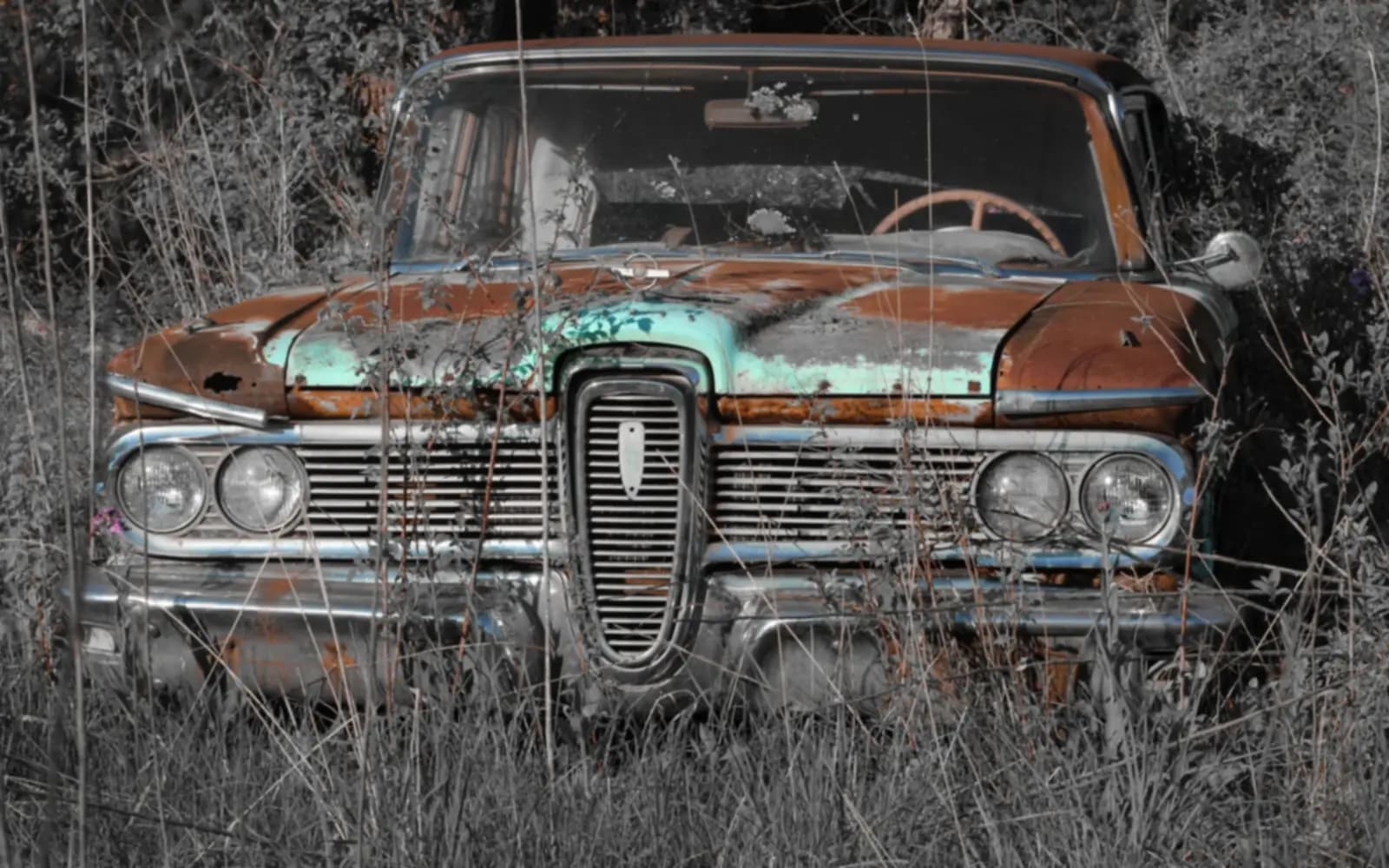
New York actually answers two different questions about a car that shows up abandoned on your property, and each one has its own dollar threshold. Mixing them up is the easiest way to misjudge what you're allowed to do. The first question is whether the vehicle already belongs to your town, city, or village. The second is whether you can get rid of it yourself. They don't share a number, and they don't share an answer. This guide is about one car in that spot — if unregistered or inoperable vehicles have been piling up on your property for a while, too many junk cars on one property: NY code-violation risk is the more relevant read, since that's a local code-enforcement question rather than the state abandoned-vehicle law covered here.
Question one: does the car already belong to the local government?
Under New York's Vehicle and Traffic Law §1224, an abandoned vehicle with no plates and a wholesale value of $2,250 or less has its ownership automatically vest in the local authority: the town, city, or village where it sits. That happens by operation of law; you don't have to petition for it, and neither does the town. If the car on your property meets both conditions, it is already not yours to deal with. It belongs to local government whether anyone has filed paperwork yet or not. New York's consumer-facing guidance doesn't spell out an exact formula for calculating that wholesale value; in practice, it's closer to what a scrap buyer or a dealer taking it in trade would offer, not a private-party asking price.
What if it has plates, or it's worth more than $2,250?
If the car still has plates, or its wholesale value is above $2,250, the automatic transfer under §1224 doesn't apply. Ownership stays exactly where it was, at least on paper, even though the car is sitting on your land without your permission. This is where a lot of property owners get stuck: the vehicle isn't legally the town's problem, but it doesn't feel like yours either. If this is happening on a public street instead of your own property — especially in New York City — the reporting process runs differently; we cover that split in abandoned car on a NYC street: 311 vs NYPD.
Question two: can you get rid of it yourself?
Only after the local authority has been asked and has declined to take custody. At that point, DMV guidance allows a private property owner to transfer the vehicle directly to a registered dismantler using Form MV-37, but only if all three of these are true at once: the car is worth $1,250 or less, it's 10 or more model years old, and it has sat abandoned for at least one month. Miss any one of the three and this particular shortcut isn't available to you. That's a different dollar figure than the $2,250 threshold in question one. The two numbers govern two different actors, and confusing them is where most of the misunderstanding about this topic comes from.
How do you actually ask the local authority?
New York's guidance doesn't prescribe an exact script, but the practical version is simple: contact your town, city, or village clerk's office, or in many places the local police non-emergency line, and report the vehicle, its condition, and how long it's been there. Ask directly whether the municipality will take custody under §1224. Keep a record of that contact — the date, who you spoke with, and what they said — because a decline is what opens the door to question two. Without some record that the local authority passed on it, there's no clean starting point for the MV-37 path. Exactly which office that is varies more than sellers expect — how Nassau and Suffolk handle end-of-life cars differently walks through one concrete example of that town-by-town variation on Long Island.
What actually counts as "abandoned"?
On private property, New York treats a vehicle as abandoned once it's sat at least 96 hours without your permission. That clock is tied to permission, not just elapsed time: a car a tenant or guest left with your knowledge doesn't start counting the same way a stranger's car does, since the 96 hours is measured from when it's sitting there without your okay. Causing that abandonment carries a civil penalty of $250 to $1,000, though that specific penalty applies in cities of a million or more people, which in New York effectively means it's a New York City rule. Outside the five boroughs, the 96-hour definition and the two thresholds above still apply the same way; it's specifically the dollar-penalty piece that's scoped to the biggest cities. Either way, the fine lands on whoever left the car there, not on the property owner stuck hosting it.
Walking through it: a driveway example
Say a car with no plates has been sitting behind a garage near our Poughkeepsie page for two months. Because it has no plates, the first question is whether its wholesale value is $2,250 or less: if so, it already belongs to the town, and the property owner's move is to report it and let local government take custody. If the town looks at it and declines, maybe because it's low priority or the paperwork stalls, the second question opens up: is it worth $1,250 or less, is it 10-plus model years old, and has it been sitting at least a month? If all three are true, Form MV-37 lets the property owner transfer it straight to a registered dismantler without waiting any longer. If the car doesn't clear that second, stricter set of conditions, the property owner is stuck in the same limbo as anyone whose abandoned car has plates or a higher value, still not legally theirs to move on their own.
Where CashMyCarNY fits in
None of this applies if the car in question is actually your own and you're just ready to be done with it, rather than someone else's vehicle left behind. If that's your situation, our guide on how to sell a junk car in New York covers the rest of the process. We walk sellers through New York DMV paperwork end to end: title transfer, plate surrender, the FS-6 receipt. An instant offer takes about 60 seconds with no haggling. Towing is free anywhere in the state, and we come to you whether the car runs or not.
Quick answers for property owners
Does the $2,250 threshold use the car's retail value or its wholesale value? Wholesale value: that's the number Vehicle and Traffic Law §1224 actually uses, not what the car might fetch in a private sale.
A car's been sitting on a rural property near Syracuse for months with nobody claiming it. Does a small town handle question one differently than a big city would? The $2,250 automatic-vesting threshold comes from state law, not local ordinance, so a small town near our Syracuse page works through the same two questions as anywhere else. What can differ town to town is how quickly the local authority responds once you ask, and that's local capacity, not a different rule.
What if the car doesn't qualify under either threshold? Then neither the automatic local-government transfer nor the MV-37 self-help option is available, and New York's consumer-facing guidance doesn't spell out a next step for that specific gap. A call to the municipality's code enforcement office is a reasonable next move.
Who pays the $250 to $1,000 abandonment fine, the property owner or whoever left the car? Whoever caused the abandonment, not the property owner hosting it. That specific penalty also only applies in cities of a million or more people, which in practice means New York City.
The short version
New York asks two separate questions about an abandoned car on your property, each with its own dollar threshold. Question one: if it has no plates and is worth $2,250 or less, it already belongs to the local town, city, or village by operation of law. Question two: only if that local authority declines custody can a property owner transfer it directly to a registered dismantler using Form MV-37, and only if it's worth $1,250 or less, is 10-plus model years old, and has sat for at least a month. Keep those two numbers separate and you'll know exactly where you stand.
Get your instant offer
Free towing · No hidden fees · No obligation
Frequently Asked
Will you buy a car that failed NY inspection?
Yes. A failed inspection is one of the most common reasons people call us — and the repair estimate is often worth more than the car. We buy it whether it passed or not.
What kinds of cars do you buy?
Just about anything — running or not, wrecked, flooded, rusted out, or missing parts. We make offers on cars that other buyers pass on.
Do I need the title?
Having the title in hand is best — you'll sign it over in the seller section on the back at pickup. If your title is missing, tell us your situation and we'll walk you through what's possible.
How is my offer calculated?
We price your car based on year, make, model, and condition, plus current scrap value that week. Newer and larger vehicles are generally worth more, but there is no typical figure worth quoting — the number depends on your specific car, so get your own instant offer for the real one.
Is towing really free?
Yes — free towing means $0, no hidden fee, anywhere in New York.
How fast can you pick up?
We move quickly once your offer is accepted. Exact timing depends on your location and schedule, so we'll confirm a pickup window with you directly.
What paperwork do I need in NY?
You'll need your signed-over title, and your plates should come off before pickup. New York requires sellers to surrender plates to the DMV before canceling insurance, and the DMV issues an FS-6 receipt for the surrender — we'll walk you through it.
What happens to my plates?
Remove your plates before we arrive for pickup. You'll then surrender them to the DMV and keep the FS-6 receipt as your proof of surrender — check dmv.ny.gov for details on the process.
When and how do I get paid?
You get paid at pickup once the vehicle and paperwork are confirmed — no waiting around for a check in the mail.
We’ll Buy It.
Because when it comes down to it, junk cars are our thing. Anywhere in New York.